Page Navigation

Go to Content | Go to Main Menu | Go to Search

FCE BUT

Menu
  • Applicants Submenu
    • Why study at the FCE?
    • Short-term study & Training
    • Programmes in English
    • Open Day

    E–application

  • Students Submenu
    • Academic Year
    • Degree Programmes
    • Courses
    • Student Associations
    • Dictionary of Building
    • Contacts
    • Final Thesis (external link)
    • Library and Information Centre (external link)

    Office hours at Office of Academic Affairs

    • Monday
      13:00 – 15:00
    • Wednesday
      9:00 – 12:00
    • Thursday
      9:00 – 12:00

    More about Office of Academic Affairs

    Do not miss

    • May 27, 2026

      ICBMPT 2026: International Conference on Building Materials, Products & Technologies in Brno

    • June 21, 2026

      International Conference NTCC 2026

    Calendar of Events

  • Research Submenu
    • Achievements
    • Licences & Patents
    • Research Centers
    • Research Themes
    • Projects
    • Results
  • Cooperation Submenu
    • Corporate cooperation
    • International cooperation
    • Cooperation with schools
    • Faculty services
  • Faculty Submenu
    • Map of Campus
    • Organizational structure
    • People
    • Media
    • Currently
    • History
    • Social Safety
    • Contacts

    News

    • Scientists Teach Wood and Robots to Work Together

    • From FCE to the World’s Largest Recycling Line: Plastic Guys Open a New Production Hall in Kuřim

    More news

    Do not miss

    • May 27, 2026

      ICBMPT 2026: International Conference on Building Materials, Products & Technologies in Brno

    • June 21, 2026

      International Conference NTCC 2026

    Calendar of Events

  • CS
  • Log on

    Log on

    • Student Intranet (external link)
    • FCE Moodle (external link)
    • Intaportal BUT (external link)
    • BUT mail / Office 365 (external link)
    • BUT mail / Google (external link)
  • Hledat
  • CS

Zavřít

  1. FCE
  2. Faculty
  3. News
  4. News Detail

Scientists Teach Wood and Robots to Work Together

In Třebíč, an unassuming experimental bridge may point the way towards a cheaper and more sustainable transport infrastructure in the Czech Republic. Built for CZK 16 million, it cost roughly half as much as a comparable reinforced concrete structure. Scientists are using the bridge to test how the long-proven durability of wood can be combined with modern 3D concrete printing and digital sensors.

A Bridge That Monitors Itself

The project, led by Roman Fojtík from the Faculty of Forestry and Wood Sciences at the Czech University of Life Sciences in Prague, aims to develop a new type of timber-concrete bridge structure with real-time monitoring of its condition and performance.
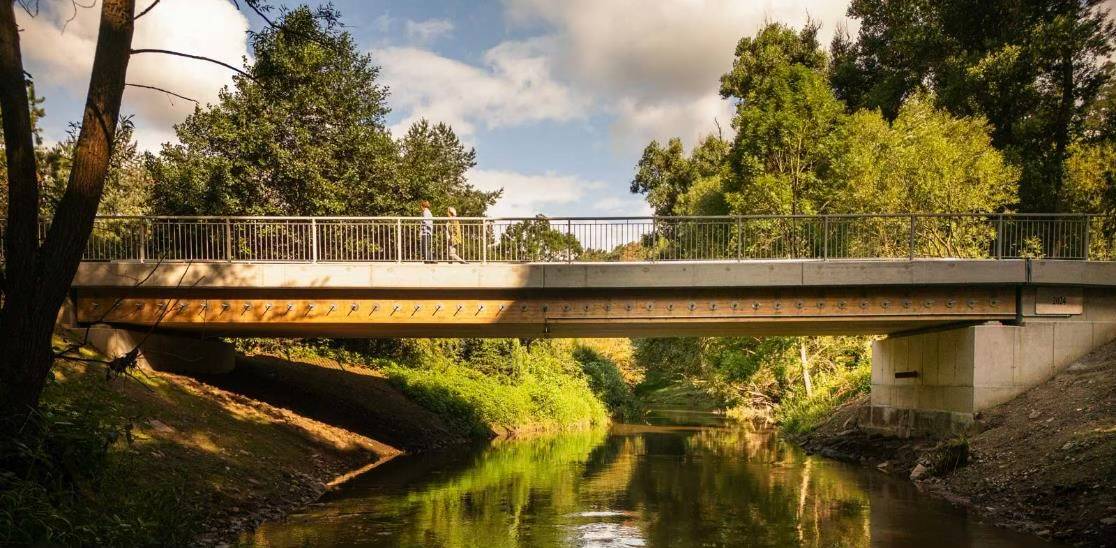
Prototype bridge developed as part of the project | Photo: Roman Fojtík, CULS Prague

Moisture is one of the greatest risks for timber structures. It can be present inside the material, where it is difficult to measure reliably. If wood is not sufficiently dried, it may swell, shrink or deform. The resulting cracks can weaken the structure, reduce the material’s strength or create conditions in which wood-decaying fungi can spread. To address this, the research team has developed an online monitoring system that works much like the bridge’s nervous system.

The sensors track not only moisture levels in real time, but also excessive loading and the risk of ice forming on the road surface. “We currently monitor 62 bridges around the world, both remotely and on site, and we know exactly what condition they are in,” says Fojtík. The innovative use of an “ordinary” material such as wood can significantly reduce the environmental impact of construction. With continuous data and timely maintenance, the service life of a bridge can be extended by decades, avoiding millions of crowns in costs linked to premature demolition and waste disposal.

While ageing concrete bridges often have to be demolished, timber structures offer another option. Wood is renewable, stores carbon and allows individual components to be replaced relatively easily. It is also a material with remarkable structural durability, as shown by centuries-old bridges in the Czech Republic that are still in use today.

3D Concrete Printing on Wood

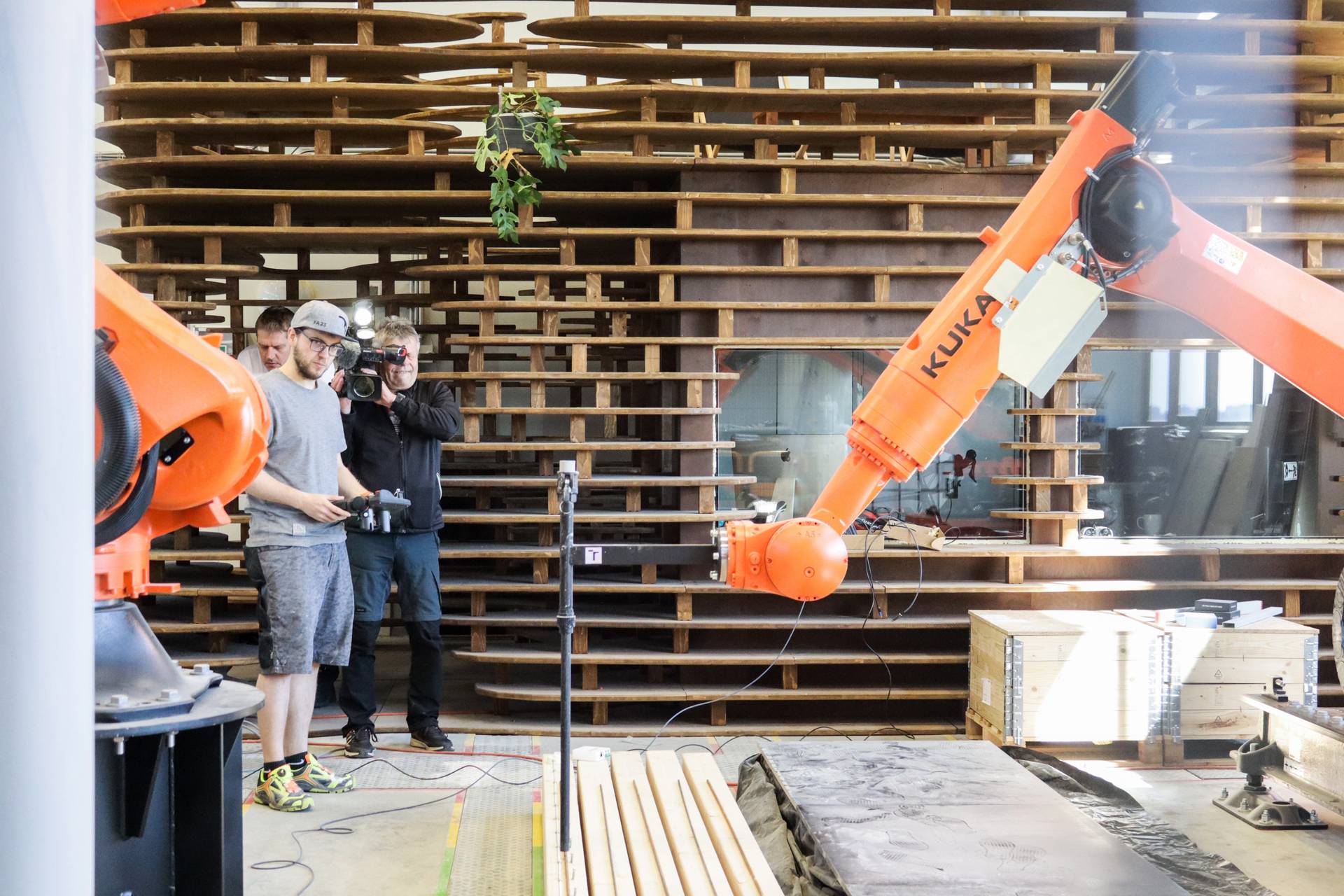
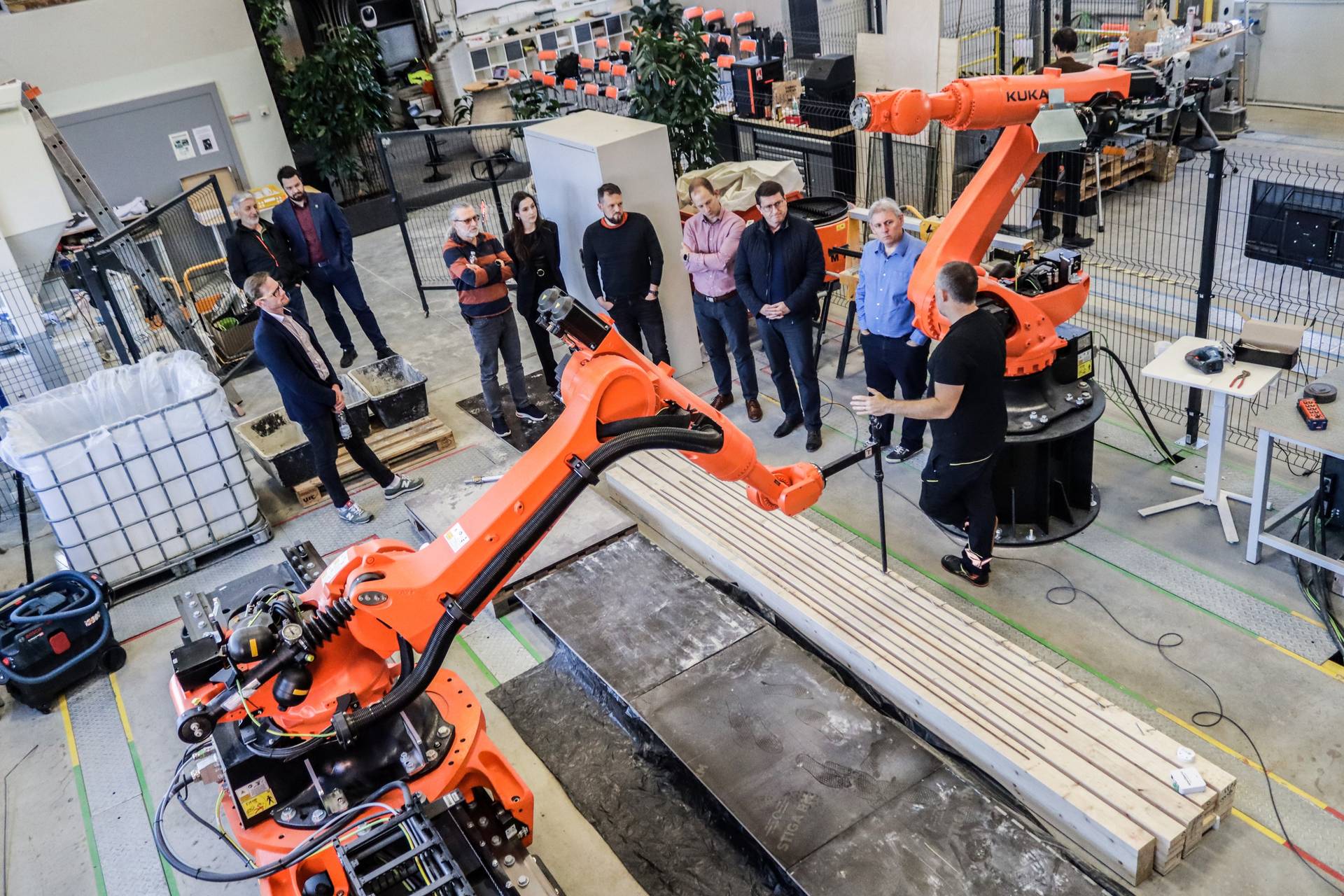
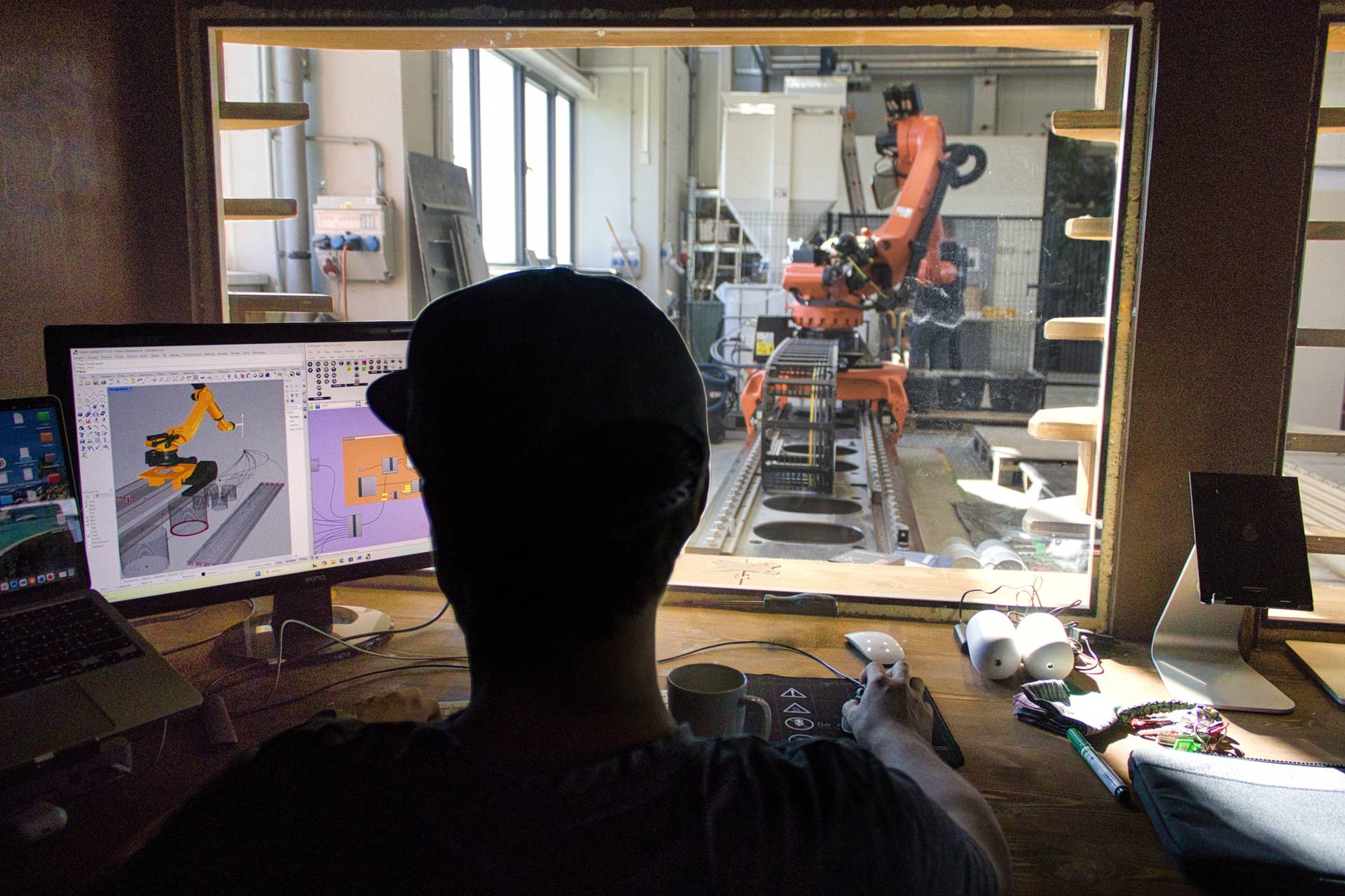
In conventional construction, formwork is first built and then filled with concrete. At the Laboratory of Robotics and 3D Printing at the Faculty of Civil Engineering, Brno University of Technology, however, concrete is applied directly by a robotic arm.
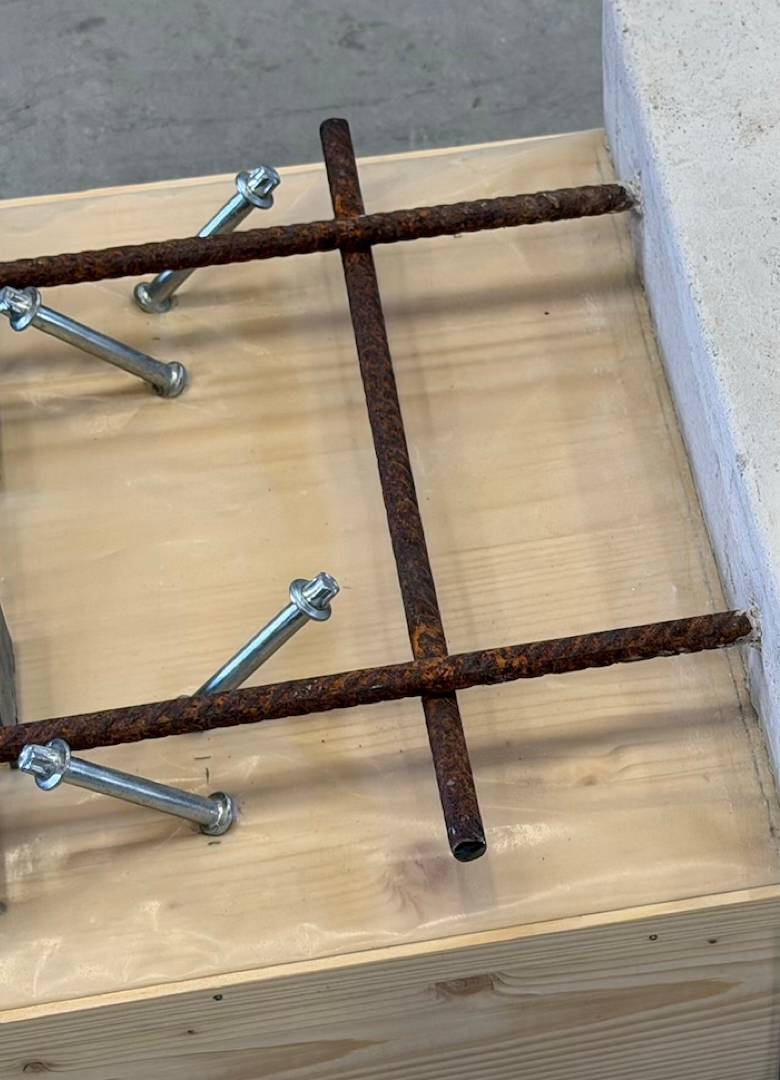
Part of the structure prepared for 3D concrete printing | Photo: David Bečkovský, FCE BUT

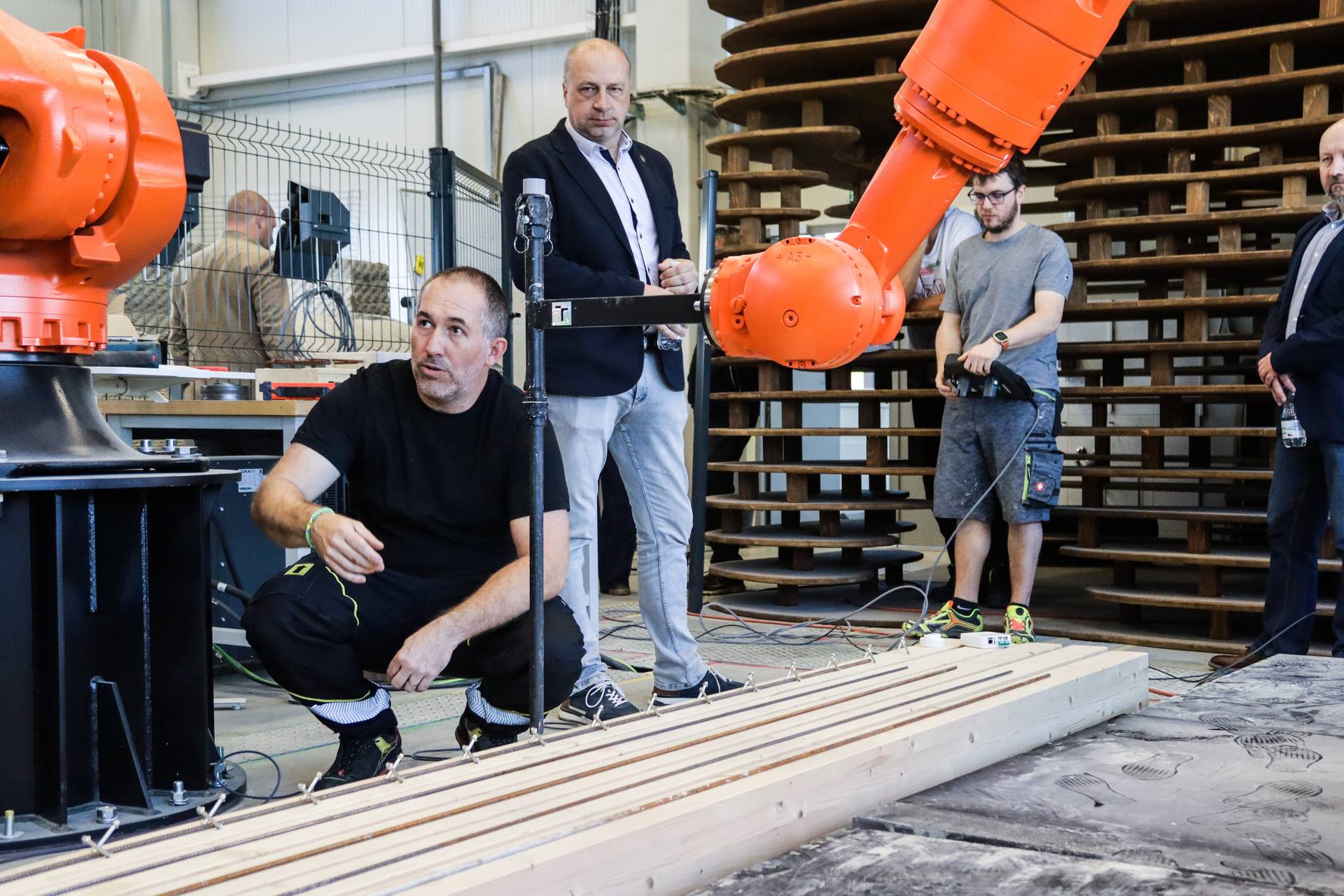
“The biggest challenge in 3D printing was getting the concrete mix to flow properly around the connecting screws. We had to calculate and set the nozzle path so that it passed precisely around the screws without colliding with them. Another challenge was designing the concrete mix so that no voids formed around the angled screws and the individual components of the mixture did not separate,” explains David Bečkovský, head of the Laboratory of Robotics and 3D Printing at the Faculty of Civil Engineering, Brno University of Technology.

In addition to 3D printing, the researchers are also exploring other prefabrication methods, including automated installation of coupling screws and robotic concrete casting on curved surfaces. The composite connection must be both strong and dimensionally stable.

Advanced Research Meets Industry

The project has already produced a number of practical solutions and technologies, from specialised timber sealing and new concrete mixes to a waterproofing system and a Building Information Model designed to monitor the bridge throughout its entire service life.

One of the key outcomes is a proposal for technical regulations for ČKAIT. For the first time, these regulations define standards for monitoring internal moisture in load-bearing timber structures. The researchers have also filed a patent for a unique measurement system capable of detecting the risk of rot long before it becomes visible on the surface.

To help bring these innovations to Czech roads as quickly as possible, the research team worked directly with manufacturers and construction companies. Together, they have shown that when traditional materials are used intelligently and with sustainability in mind, they can fully meet the demands of modern construction.
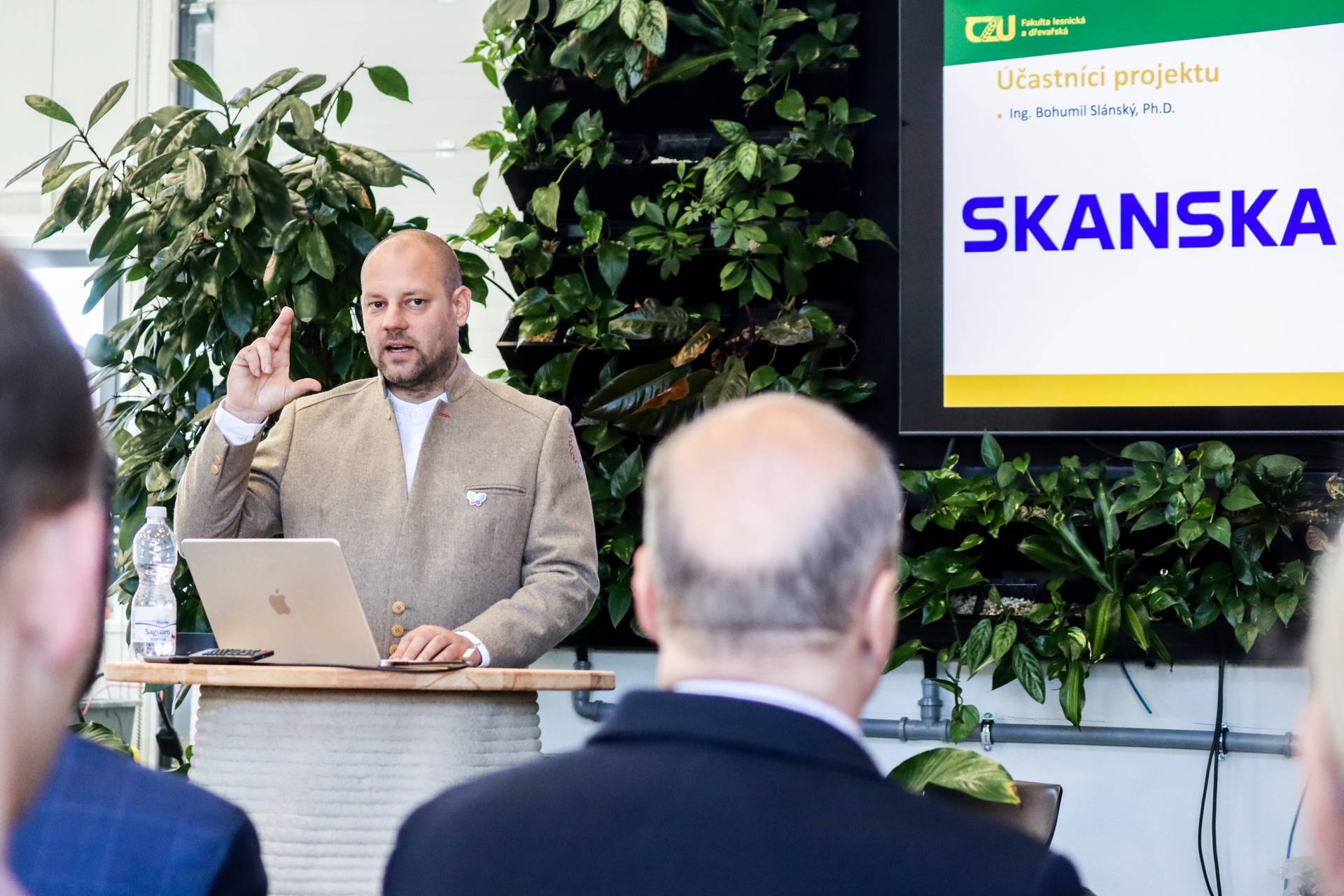
  • Roman Fojtík presenting the results of TAČR project CK04000199, focused on the development of a timber-concrete bridge with remote monitoring | Photo: Dagmar Sukopová, FCE BUT
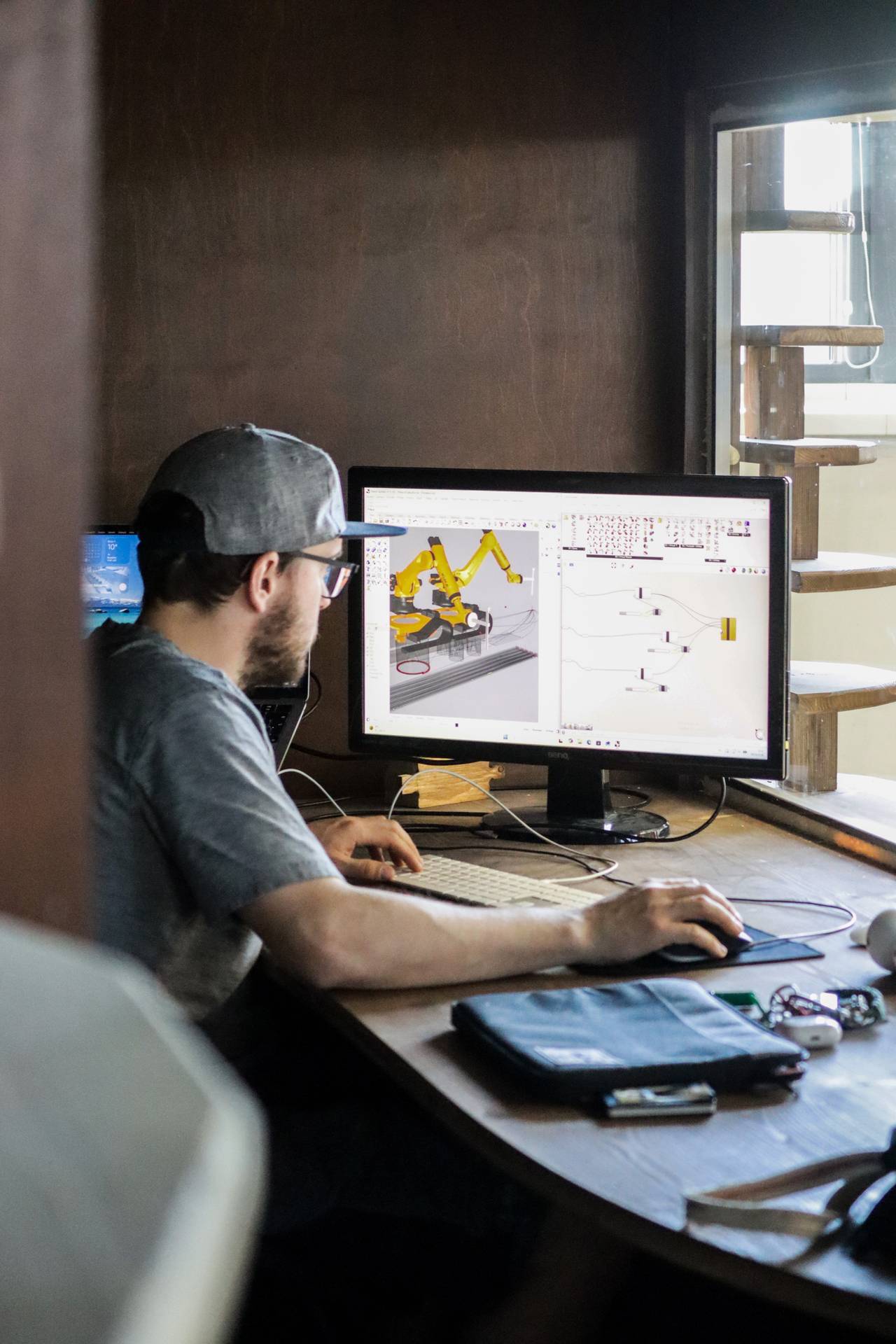
  • Inside the control room of the Laboratory of Robotics and 3D Printing at the BUT Faculty of Civil Engineering during a 3D concrete printing demonstration | Photo: Dagmar Sukopová, FCE BUT
  • Vojtěch Vaněk from the BUT Faculty of Civil Engineering guiding the robotic arm as part of the preparation for 3D concrete printing | Photo: Dagmar Sukopová, FCE BUT
  • Project team members during the final presentation of the project results | Photo: Dagmar Sukopová, FCE BUT
  • David Bečkovský explaining the process of 3D concrete printing | Photo: Dagmar Sukopová, FCE BUT
  • Vojtěch Vaněk preparing to launch the 3D concrete printing process | Photo: Dagmar Sukopová, FCE BUT

Share Share Share

Short link https://www.fce.vutbr.cz/en/faculty/news/8428
Responsible person Mgr. Almíra Pitronová
Published May 14, 2026
  • May 11, 2026

    From FCE to the World’s Largest Recycling Line: Plastic Guys Open a New Production Hall in Kuřim

  • March 27, 2026

    Our Students Won the 2026 Construction Hackathon on Sustainable Housing

  • March 20, 2026

    Faculty of Civil Engineering BUT Representative Ball 2026: Civil Engineers Took Over the Dance Floor in the Spirit of La Fiesta

  • May 14, 2026

    Scientists Teach Wood and Robots to Work Together

  • April 29, 2026

    Erasmus+ BIP – Brno 2026 at Faculty of Civil Engineering, BUT

All News

Responsibility: CIT / Ing. Miroslav Menšík, Ph.D.

Applicants

  • Why study at the FCE?
  • Short-term study & Training
  • Programmes in English
  • Open Day
  • E–application (external link)

Students

  • Academic Year
  • Degree Programmes
  • Courses
  • Student Associations
  • Dictionary of Building
  • Contacts
  • Final Thesis (external link)
  • Library and Information Centre (external link)

Research

  • Achievements
  • Licences & Patents
  • Research Centers
  • Research Themes
  • Projects
  • Results

Cooperation

  • Corporate cooperation
  • International cooperation
  • Cooperation with schools
  • Faculty services

Faculty

  • Map of Campus
  • Organizational structure
  • People
  • Media
  • Currently
  • History
  • Social Safety
  • Contacts

Log on

  • Student Intranet (external link)
  • FCE Moodle (external link)
  • Intaportal BUT (external link)
  • BUT mail / Office 365 (external link)
  • BUT mail / Google (external link)

You might also like

AdMaS Centre
icon AdMaS Centre (external link)
BUT
(external link)
Halls of Residence and Dining Services
(external link)
CESA
(external link)

Faculty of Civil Engineering BUT

Faculty of Civil Engineering BUT

Veveří 331/95
602 00 Brno, Czech Republic

www.fce.vutbr.cz
contactus.fce@vutbr.cz

  • Facebook (external link)
  • X (Twitter) (external link)
  • Instagram (external link)
  • YouTube (external link)
  • LinkedIn (external link)

Copyright © 2026 Brno University of Technology Cookies settings

Cookie usage information

To Top