Volcanologist Lukáš Krmíček Studies One of the World's Most Active Volcanoes, Collecting Samples During Eruptions
What does research at an active volcano involve? Volcanologist Lukáš Krmíček from FCE BUT travelled to Vanuatu to study Mount Yasur, where he collected volcanic bomb samples in the immediate vicinity of an erupting crater for further laboratory research. The expedition was followed by a trip to Indonesia and an international conference focusing on natural hazards. What is it like to work as a volcanologist in the field, and what can freshly collected samples reveal about the behaviour of volcanic rocks?
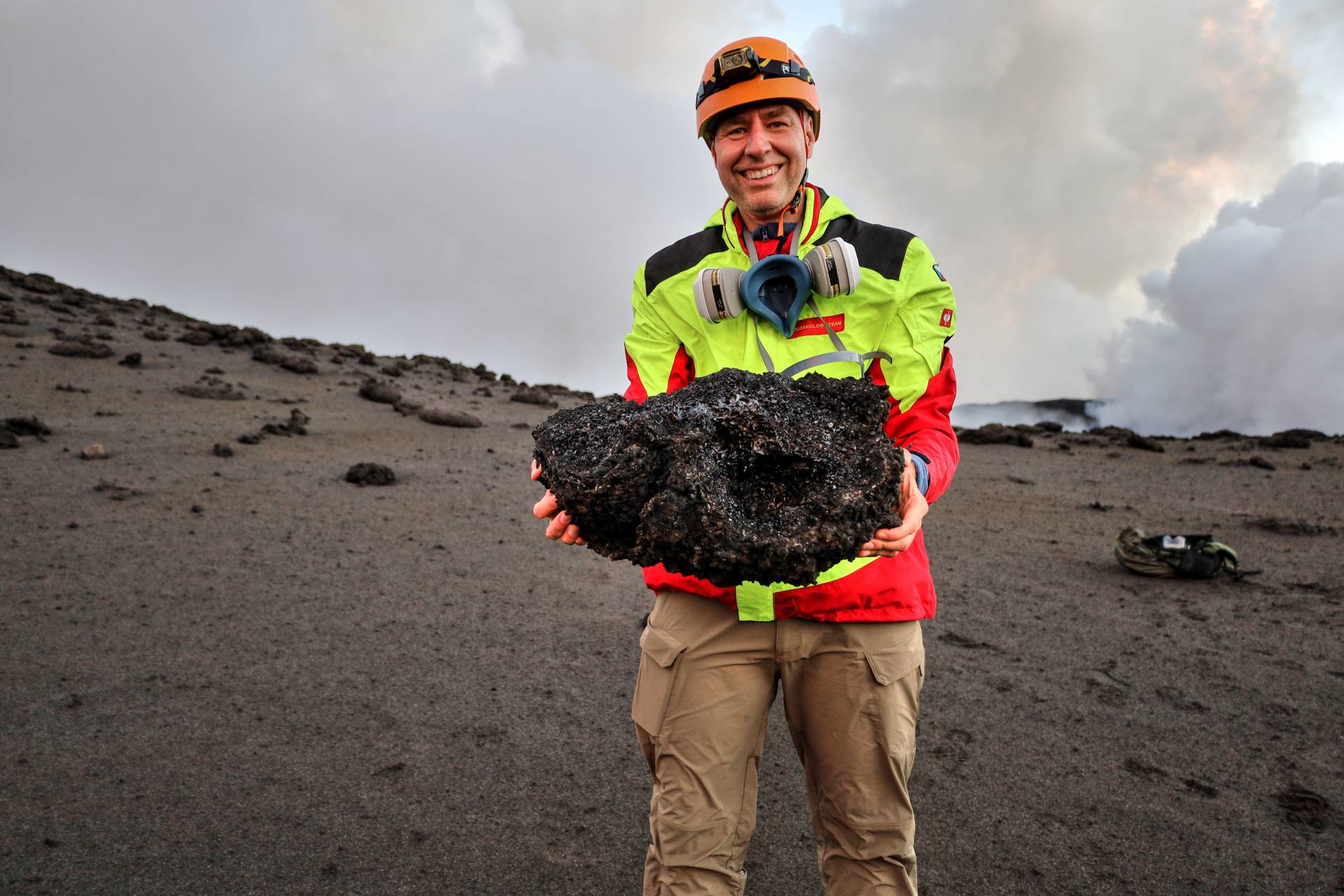
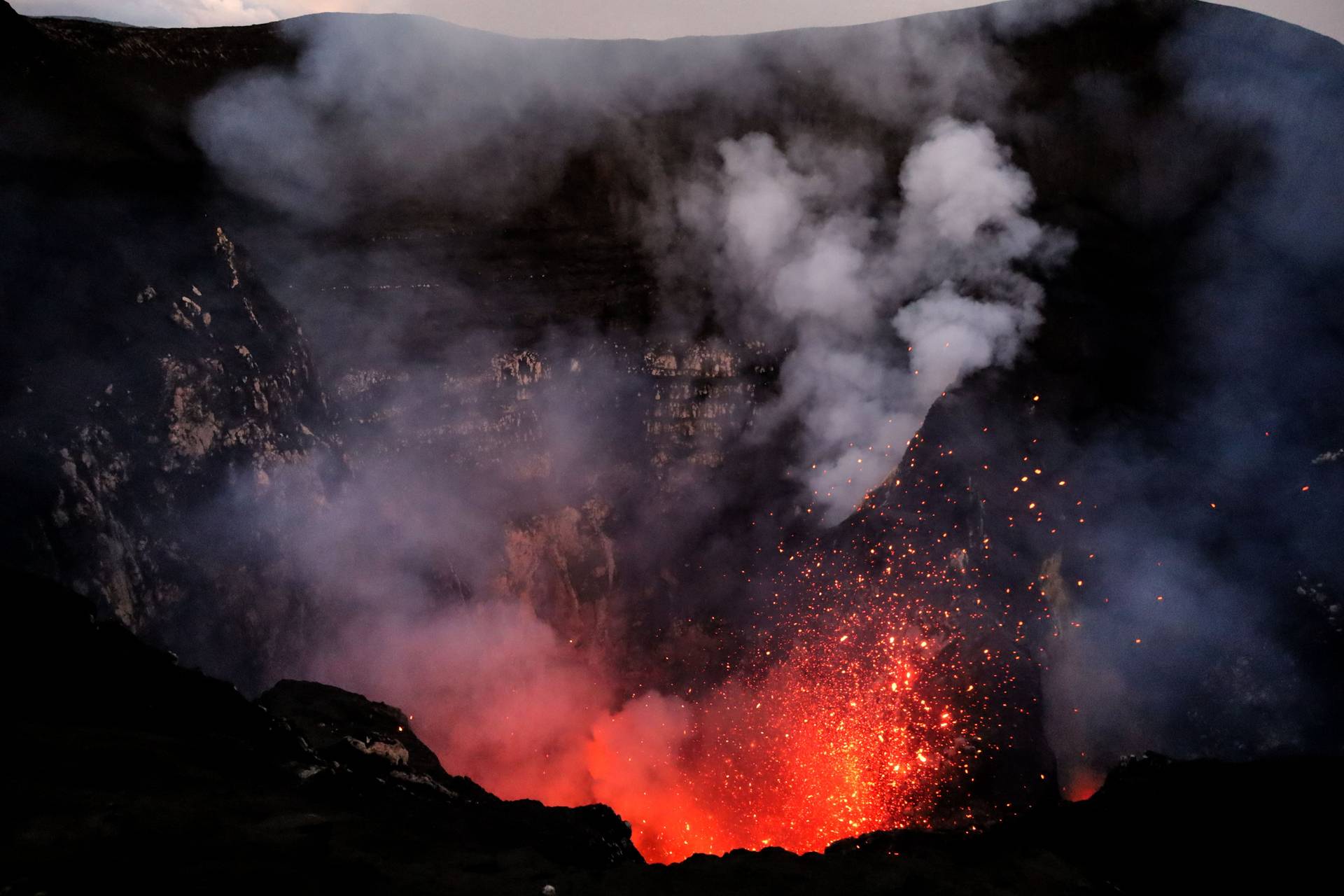
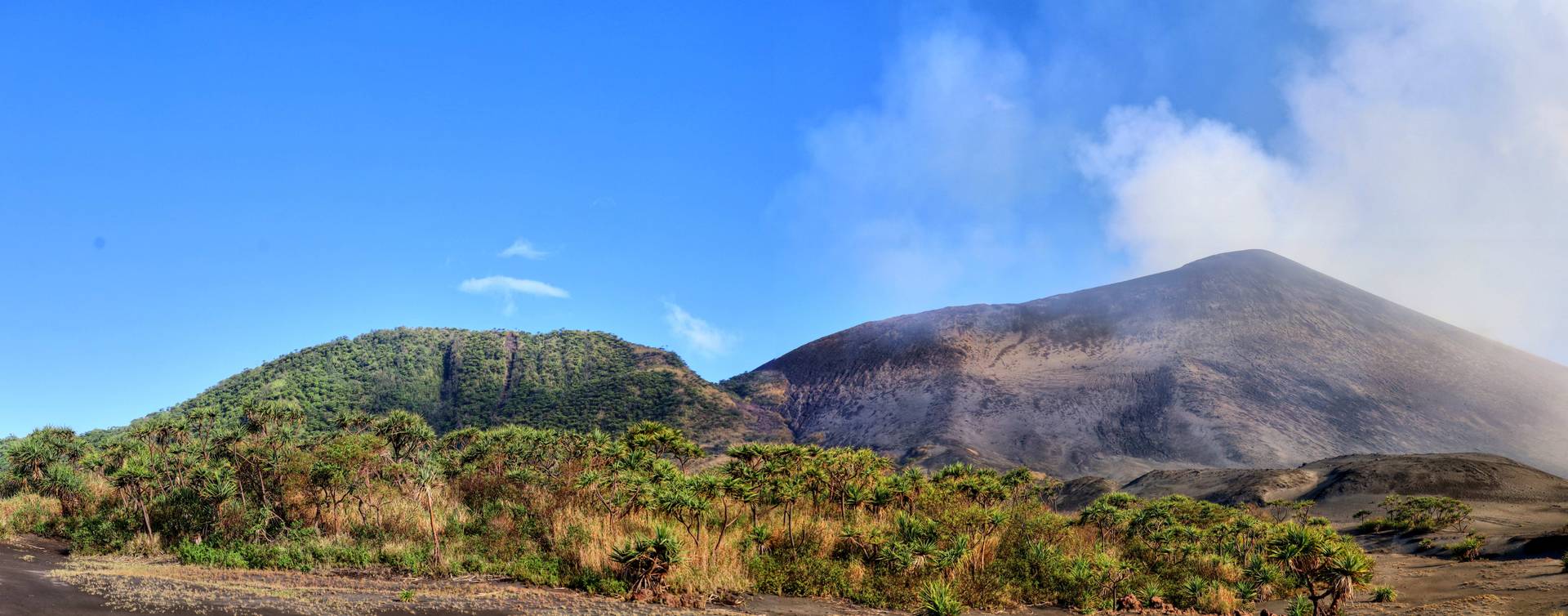
Volcanologist Lukáš Krmíček from FCE BUT embarked on a field expedition to the active Mount Yasur volcano on Tanna Island in the Vanuatu archipelago in the second half of August. Yasur is one of the world's persistently active volcanoes, characterised predominantly by Strombolian-style eruptions. Several active vents within the crater eject incandescent material during volcanic activity. Individual explosions occur at intervals of several minutes, scattering material across the surrounding area. Volcanic bombs were among the primary targets of the sampling campaign.
Yasur is also one of the few places where researchers can approach an active eruptive crater at very close range. However, this makes fieldwork extremely challenging. Moving around the crater requires constant vigilance, as explosions can propel ballistic projectiles of various sizes in different directions.
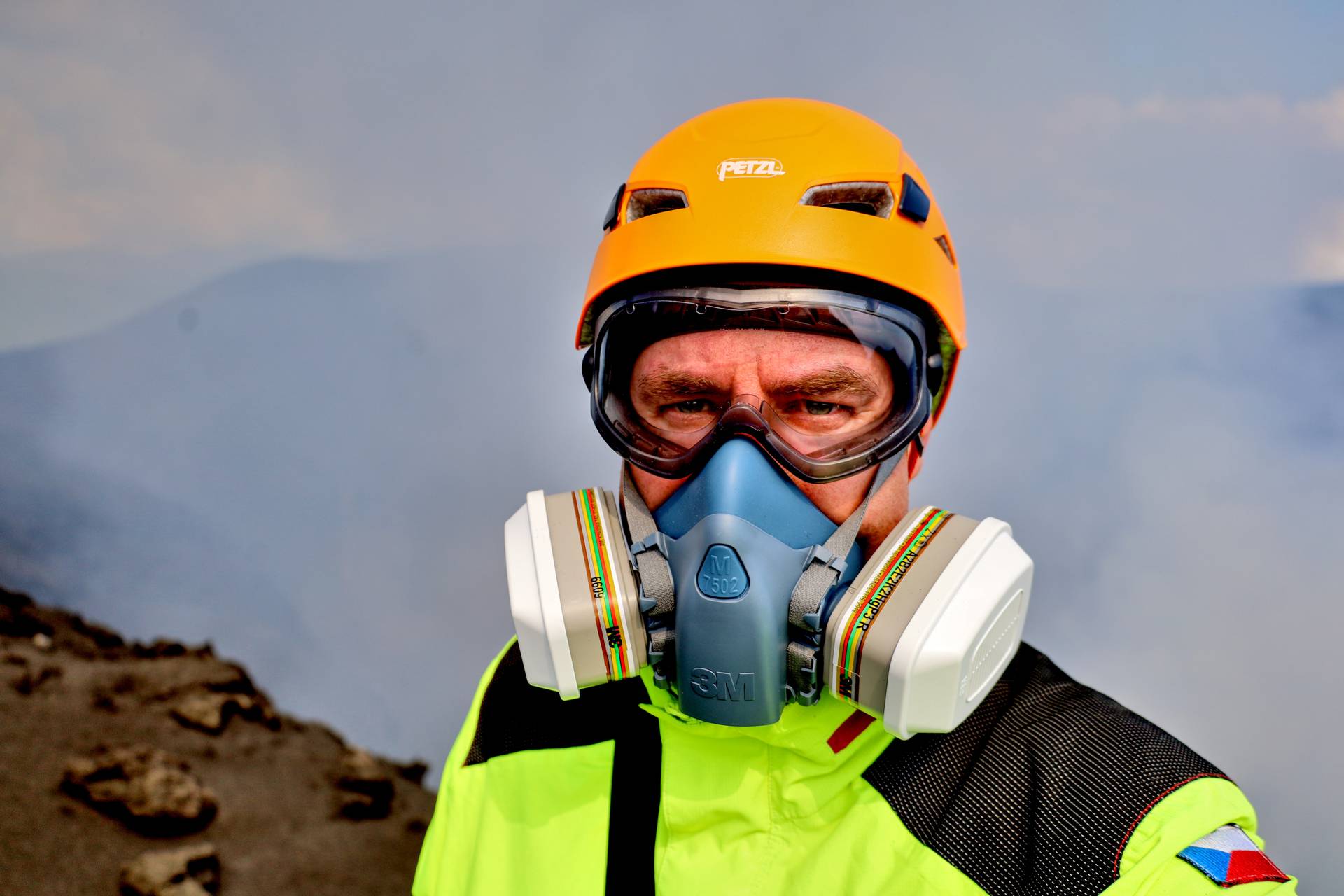
"First, there is a powerful explosion or a series of explosions. Only then does incandescent material begin flying through the air. It is important to stay where you are or move sideways if necessary, rather than turning your back on the eruption. You have just a few seconds to react. Finally, an enormous cloud of volcanic ash rises from deep within the volcano. At the same time, it is essential to continuously monitor concentrations of toxic volcanic gases," explains Lukáš Krmíček, describing the conditions encountered during the expedition.
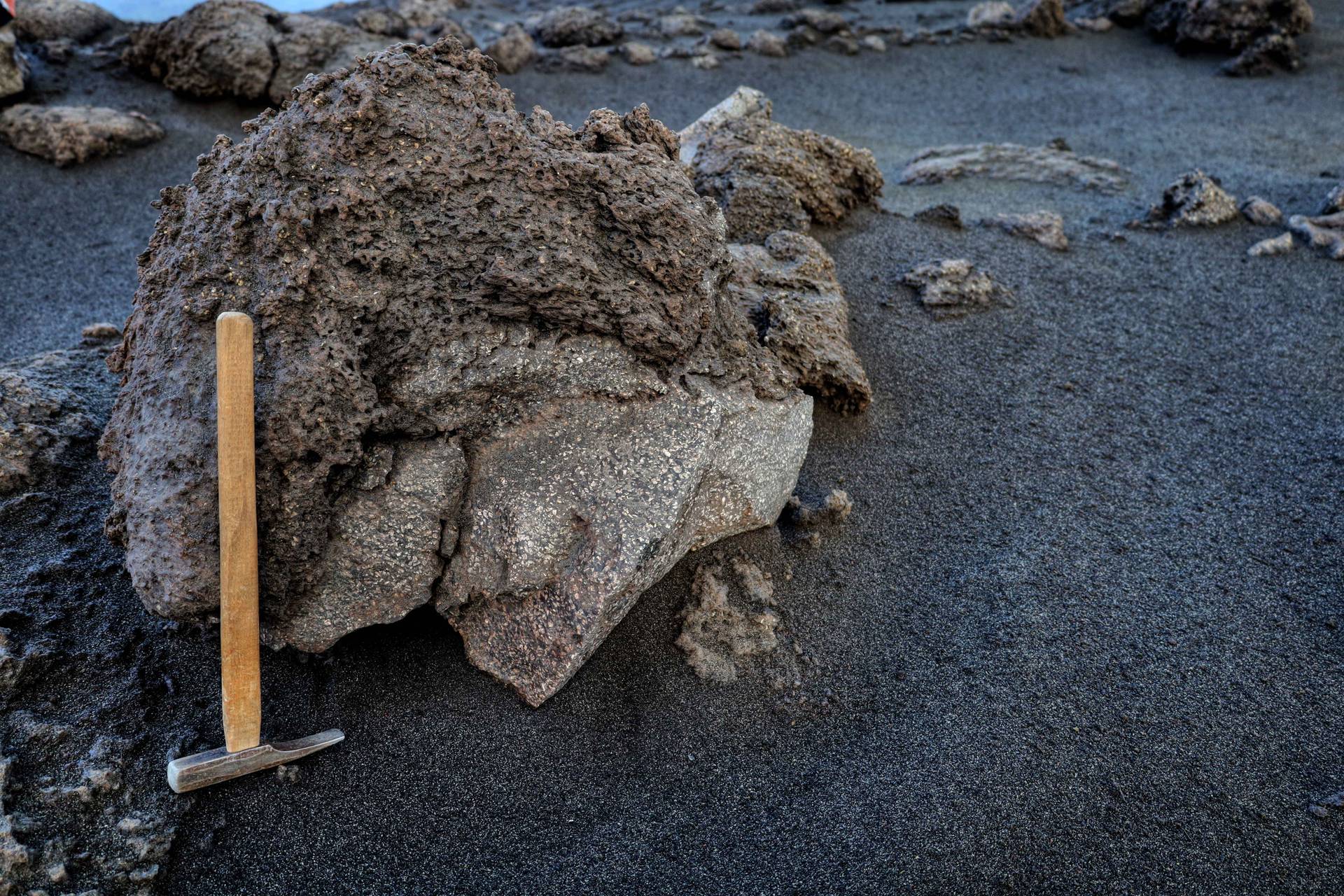
Krmíček collected volcanic bomb samples directly from their impact sites. This sampling method is important for subsequent research because the location of each sample makes it possible to relate its properties to the specific conditions under which it was deposited during the eruption. Researchers can therefore investigate characteristics such as porosity, internal structure and the mechanical properties of the rock.
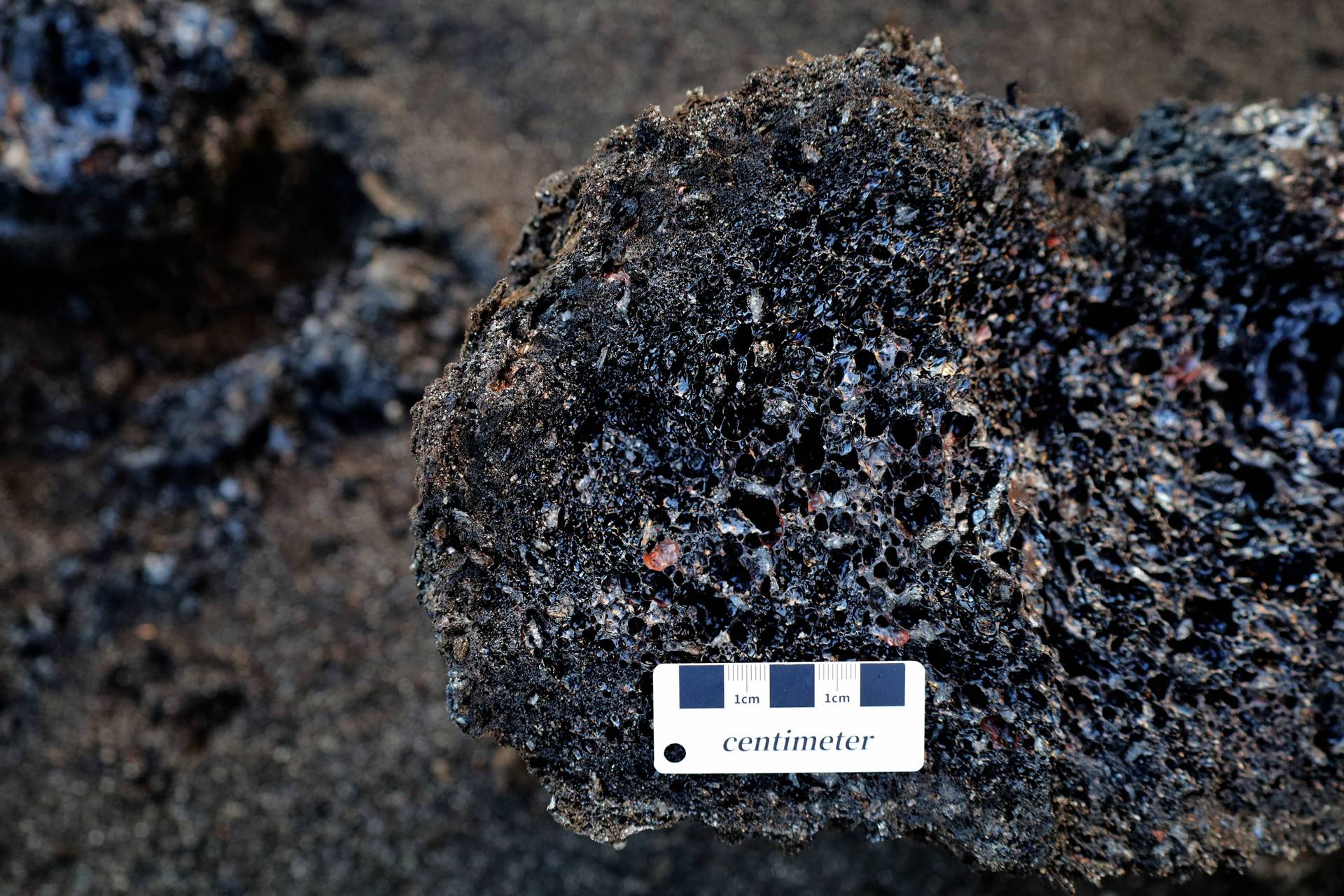
Another interesting feature of Mount Yasur is the considerable variability of its volcanic bombs. Some have a relatively simple structure and consist of gas-rich material originating from the erupting magma. Others may contain large inclusions – fragments of previously crystallised lava that have been ejected back to the surface during an eruption. The presence of these dense components can significantly alter the mechanical properties of a volcanic bomb.
"Two volcanic bombs may look similar at first glance, but their mechanical or thermomechanical properties can differ considerably. What matters is their internal structure, porosity, fractures and the presence of older, dense material," explains Krmíček.
From a Czech Volcano to the Active Mount Yasur
The research in Vanuatu builds on previous work by researchers from the Faculty of Civil Engineering BUT focusing on the mechanical properties of volcanic bombs.
In 2025, a study entitled Mechanical properties of basaltic volcanic bombs: a case study from the Uhlířský vrch volcano, Czech Republic was published in the prestigious journal Bulletin of Volcanology. The study examined volcanic bombs from Uhlířský vrch near Bruntál, investigating the relationship between their mechanical properties, internal structure, porosity and fractures. The researchers are now applying the same approach to samples collected directly from an active volcano at Yasur.
"At Uhlířský vrch, we confirmed that systematically investigating the mechanical properties of volcanic bombs is worthwhile. At Yasur, we can take this approach further by studying material formed during ongoing volcanic activity," says Lukáš Krmíček.
The stability of a volcanic edifice is influenced by several factors, including the properties of volcanic rocks, how they are deposited, including individual layers of volcanic ash, and the effects of groundwater and hydrothermal processes, which can alter and weaken rocks along fractures.
Yasur as Part of a Larger Volcanic System
Mount Yasur lies within an extensive volcanic system associated with the older Siwi Caldera, measuring approximately 9 × 4 km. The caldera formed in connection with major ignimbrite-producing eruptions. Yasur itself, standing more than 360 metres high, is located on the edge of the Yenkahe block, which measures approximately 6 × 3 km and has been uplifting very rapidly over the past millennium.
The average uplift rate is approximately 16 cm per year. This is associated with magma accumulation in the shallow parts of the volcanic system. Estimates suggest that up to 25 km³ of magma has accumulated beneath the Siwi Caldera over approximately the past 1,000 years. However, this is not a single continuous body of molten rock, but rather magma distributed throughout the surrounding rock mass.
The volcanic system is also characterised by significant hydrothermal activity. Sulphurous fumaroles, areas of elevated ground temperature and other manifestations of rising hot gases and fluids can be found around Yasur. Hydrothermal processes also occur along faults and can chemically alter and weaken the surrounding rocks. These areas therefore represent another important research target in assessing the stability of volcanic slopes.
The "Child of Krakatoa" Awakens
The field expedition was followed by a trip to Indonesia, where Lukáš Krmíček attended the international IDRiM 2026 conference in Bali, focusing on natural hazards and disaster risk management. At the conference, he presented research describing the mechanisms and spread of fires in the vicinity of active volcanic eruptions.
Vanuatu and Indonesia share similar geological settings. Both are associated with subduction zones, where one tectonic plate moves beneath another. Subduction creates the conditions for the formation of extensive volcanic arcs and is also associated with significant seismic activity. For example, the Vanuatu archipelago was struck by a powerful magnitude 7.3 earthquake this year.
In Indonesia, volcanic activity was particularly remarkable in early September. At one point, as many as six volcanoes were active simultaneously. Each volcano was exhibiting its own independent activity.
Before the conference, participants had also planned to visit Indonesia's Mount Ijen. However, the volcano had been closed since 4 September because of ongoing fires in the surrounding area. On the same day, 4 September, significant activity also began at Anak Krakatau, leading to the closure of as many as eight airports in Indonesia.
The famous "Child of Krakatoa" emerged at the site of the original volcano following the devastating 1883 eruption, which destroyed much of the island and produced one of the loudest sounds ever recorded. However, the volcano's future activity is inherently unpredictable.
In an ironic twist, a volcanic eruption disrupted a conference devoted to natural hazards.
"Paradoxically, the eruption of Anak Krakatau meant that some conference participants were ultimately unable to attend," adds Krmíček.
Further Research Awaits in the Laboratory
The expedition to Vanuatu and subsequent participation in the conference in Indonesia brought together field volcanology and natural hazard research. While fresh eruptive products, particularly volcanic bombs, were the main focus at Yasur, in Indonesia Lukáš Krmíček concentrated on ongoing volcanic activity and its links to other natural hazards.
For FCE BUT, the key significance lies in connecting volcanology, rock mechanics, geotechnics and natural hazard research. The samples collected at Yasur will now undergo laboratory analysis. The aim is to determine how the properties of different types of volcanic bombs vary and what role porosity, internal structure, fractures and inclusions of older rocks play in their mechanical behaviour.
The Yasur samples will also make it possible to compare the properties of material formed during ongoing eruptions with findings from research on older volcanic rocks. Field observations combined with laboratory measurements could contribute to a better understanding of volcanic rock behaviour and the stability of volcanic slopes. The findings may also prove useful in studying other active volcanoes whose activity affects the lives of nearby communities.
| Short link | https://www.fce.vutbr.cz/en/faculty/news/8602 |
|---|---|
| Responsible person | Mgr. Veronika Balko |
| Published |