How Do You Carry Water 80 Metres Down from a Motorway? Michal Žoužela Is Designing One of Europe's Largest Sewer Drop Shafts
How can rainwater be safely drained from a motorway to keep drivers safe? And what happens when there is a steep drop immediately below it? A research team from FCE BUT, led by Michal Žoužela, is designing a unique sewer drop shaft for a planned section of the Prague Ring Road. The structure will use a controlled vortex to convey water almost 80 metres down towards the Vltava River. Researchers are testing its performance on a seven-metre-high physical model outside Building F.
During heavy rainfall, enormous volumes of water must be safely drained from motorways. If water begins to accumulate on the road surface, it can pose a serious danger to drivers. But what happens when the water needs to be discharged into the Vltava River, almost 80 metres below?
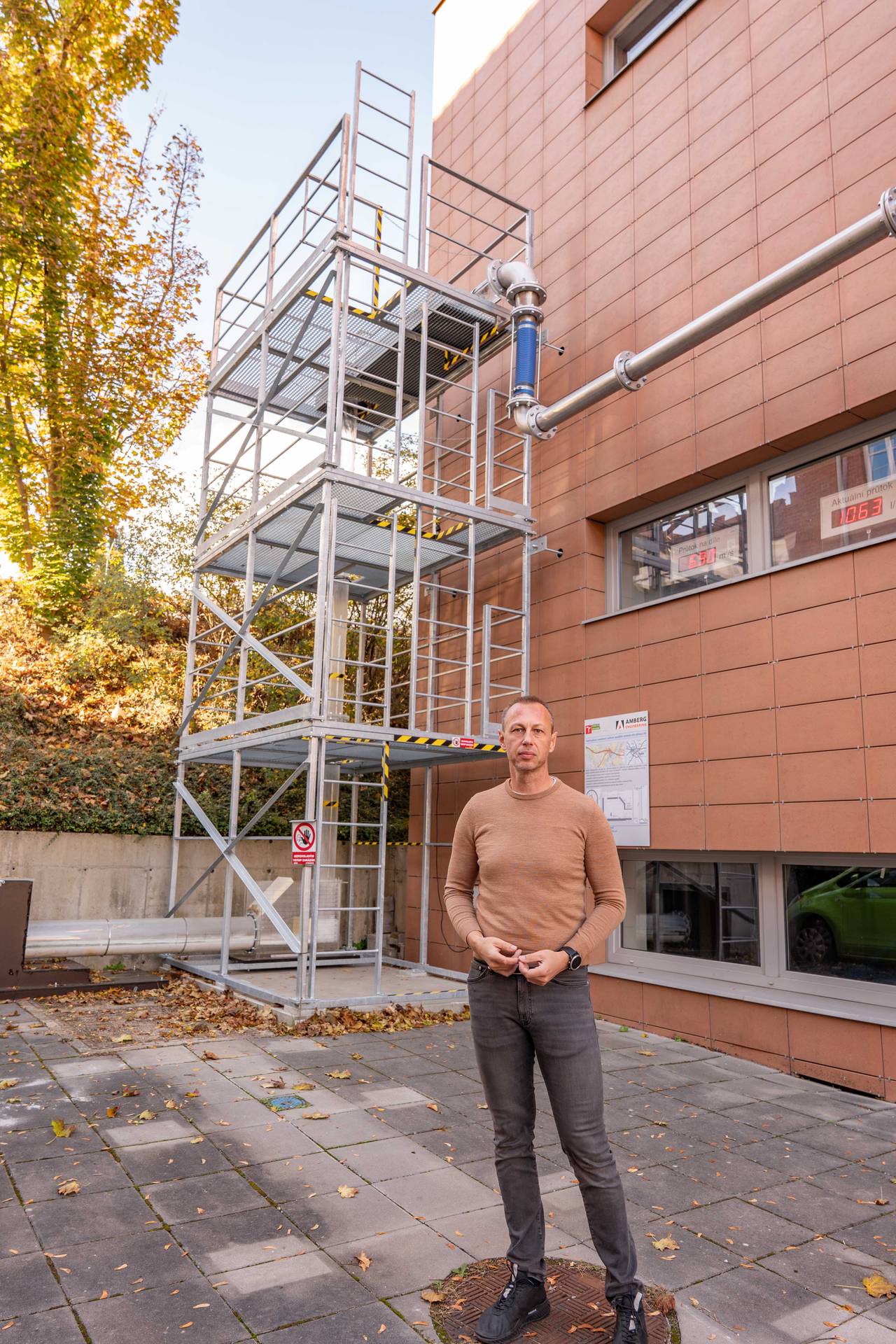
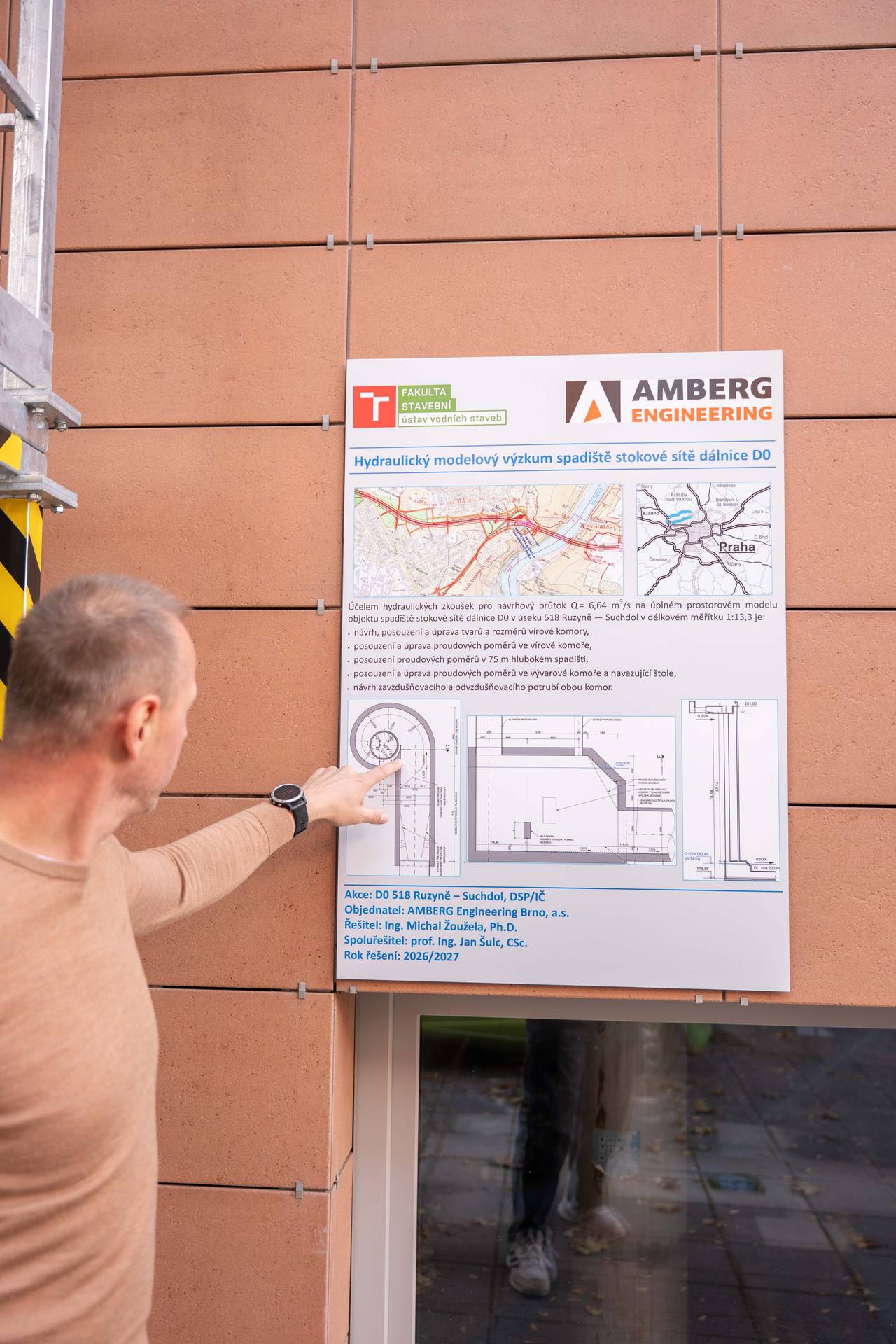
A research team from the Water Management Research Laboratory at the Institute of Water Structures, FCE BUT, led by Michal Žoužela, has taken on this challenge. The team is designing one of Europe's largest sewer drop shafts for the planned D0 motorway section between Ruzyně and Suchdol, which forms part of the future Prague Ring Road. The research is being carried out as a commissioned project for AMBERG Engineering Brno, a.s.
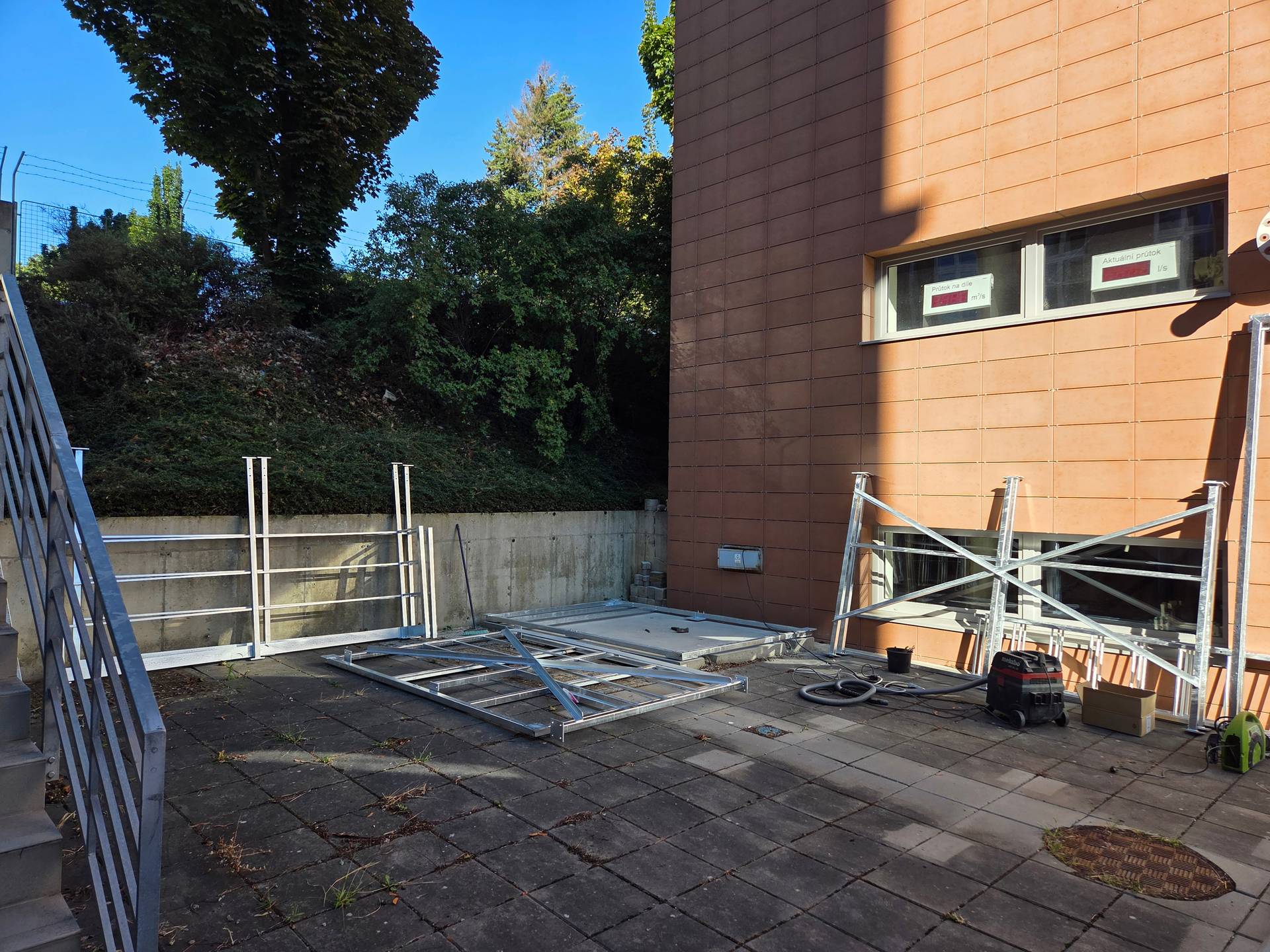
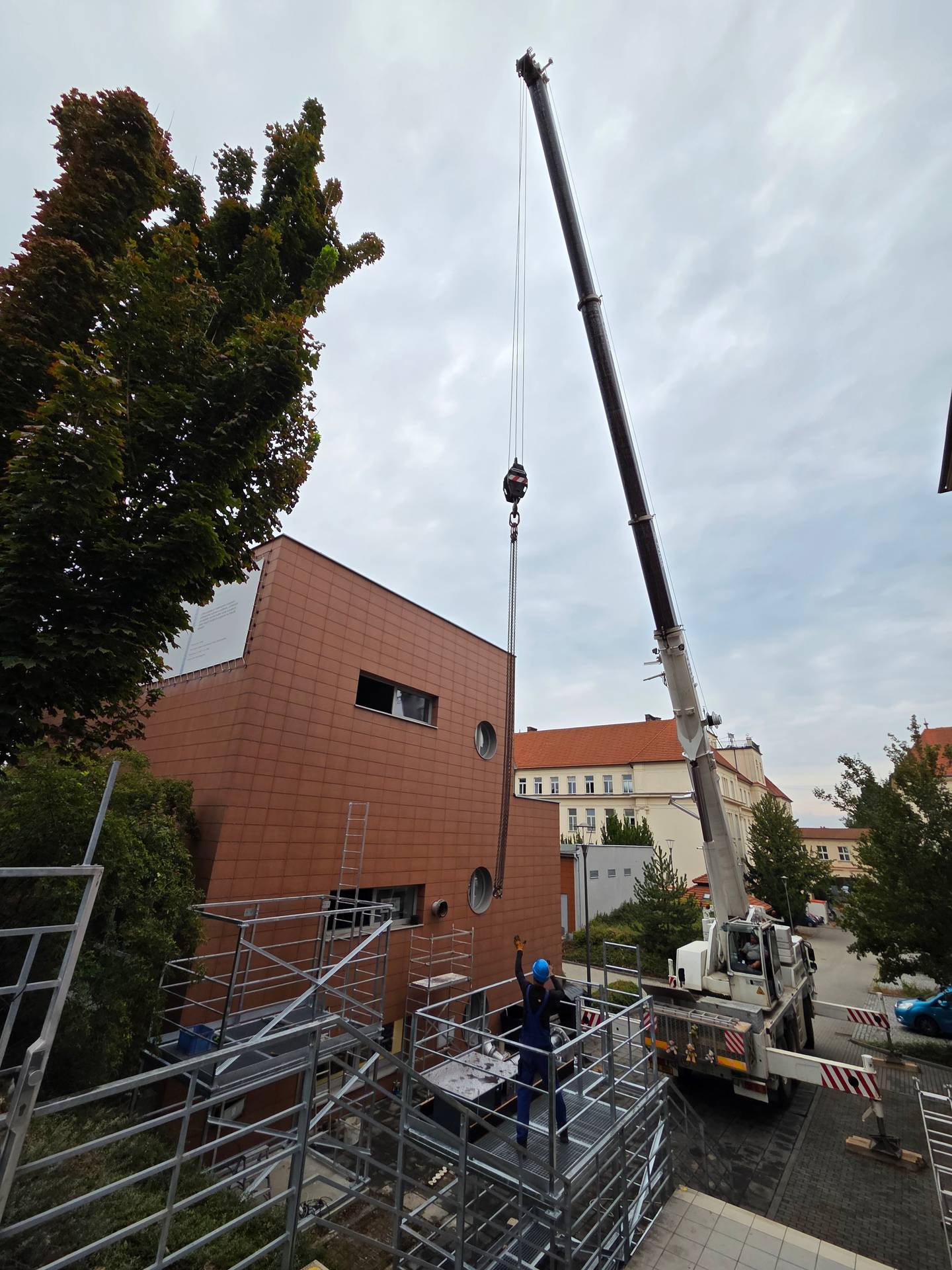
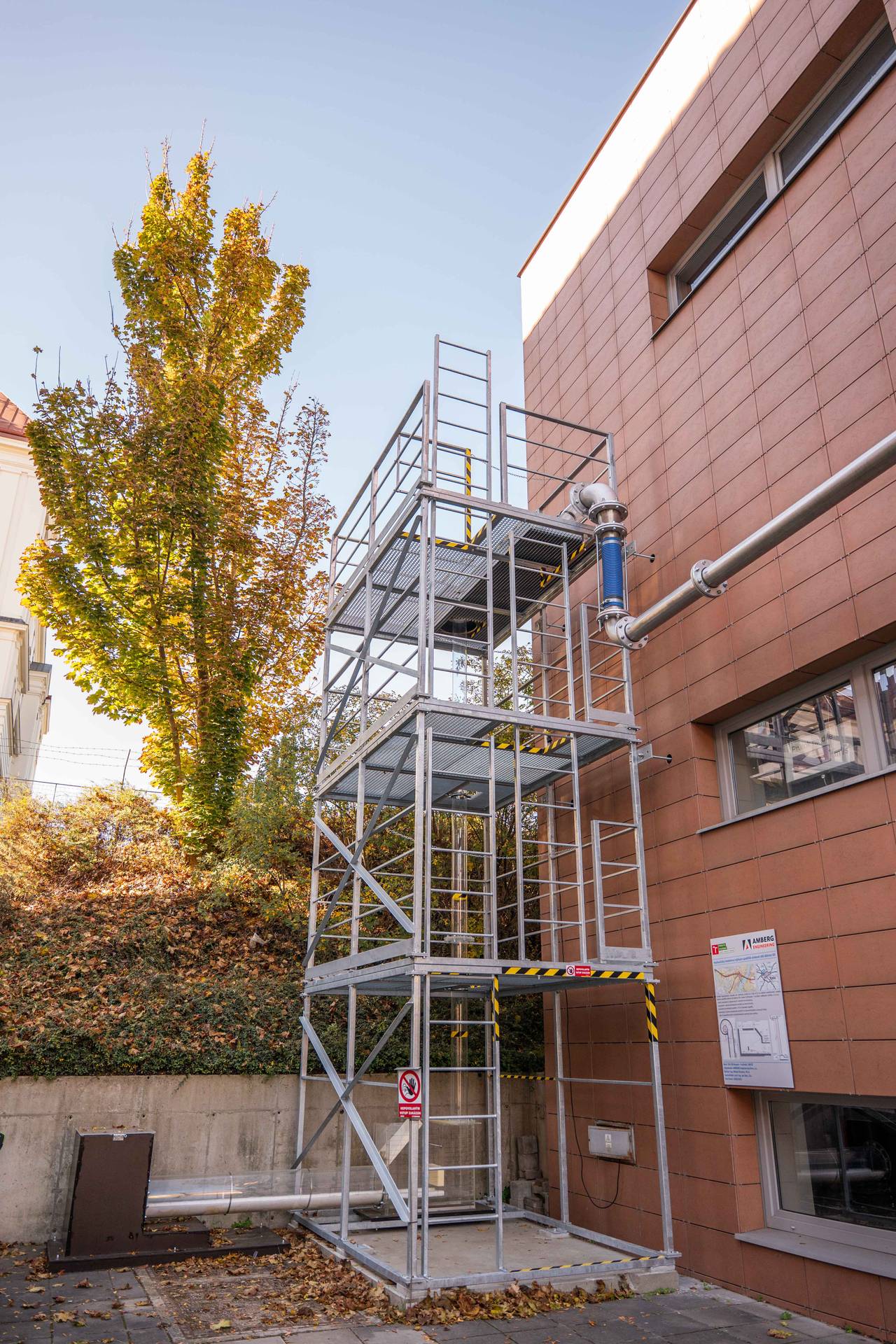
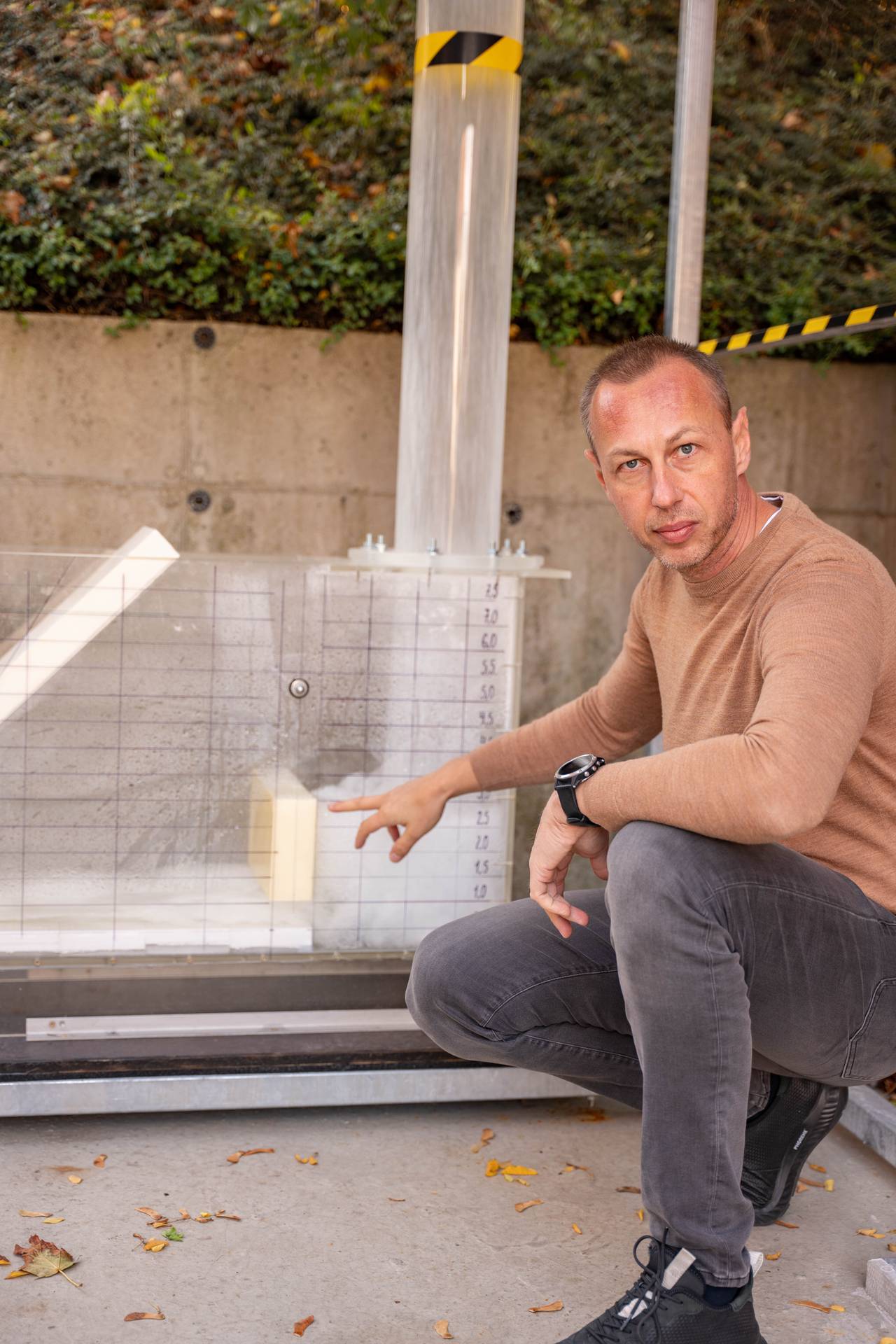
The team is testing the proposed design using a unique physical model built at a scale of 1:13.33. Standing approximately seven metres high, the model was too large to fit inside the laboratory. Instead, it has been installed outdoors, where visitors can see it near Building F on the faculty campus.
What Is a Sewer Drop Shaft?
A sewer drop shaft is an engineered structure designed to convey water safely between two points with a substantial difference in elevation. Water enters the structure at a higher level, descends through a vertical shaft and then continues into the downstream drainage system. The structure is designed to prevent the falling water from causing excessive stress or damage to the drainage infrastructure.
Making Water Swirl – Just Like Emptying a Bottle
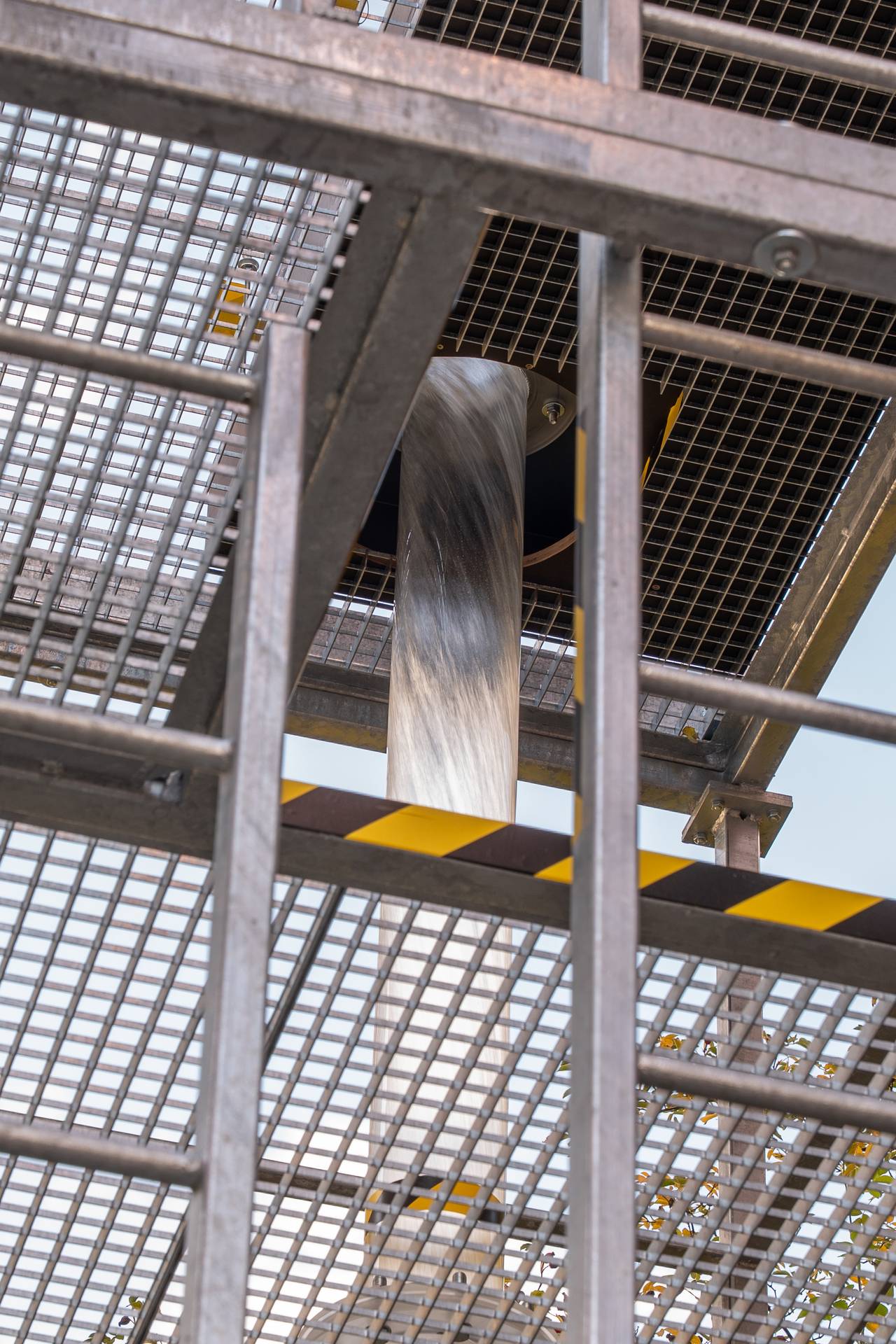
The proposed solution is based on a vortex drop shaft, which makes use of the natural movement of water. Its operating principle can be illustrated using an ordinary bottle.
"Imagine unscrewing the cap of a bottle and emptying it. The quickest and most efficient way to do this is to make the water swirl," explains Michal Žoužela.
The drop shaft will operate in a similar way. Water first enters a specially shaped vortex chamber, whose spiral layout resembles a snail shell and causes the water to rotate. As the water descends through the vertical shaft, centrifugal forces keep it flowing along the shaft walls, allowing air to move through the centre.
After descending approximately 80 metres, the water enters a stilling chamber, where its turbulent flow is dissipated. Only then does it continue through an outlet tunnel towards the Vltava River.
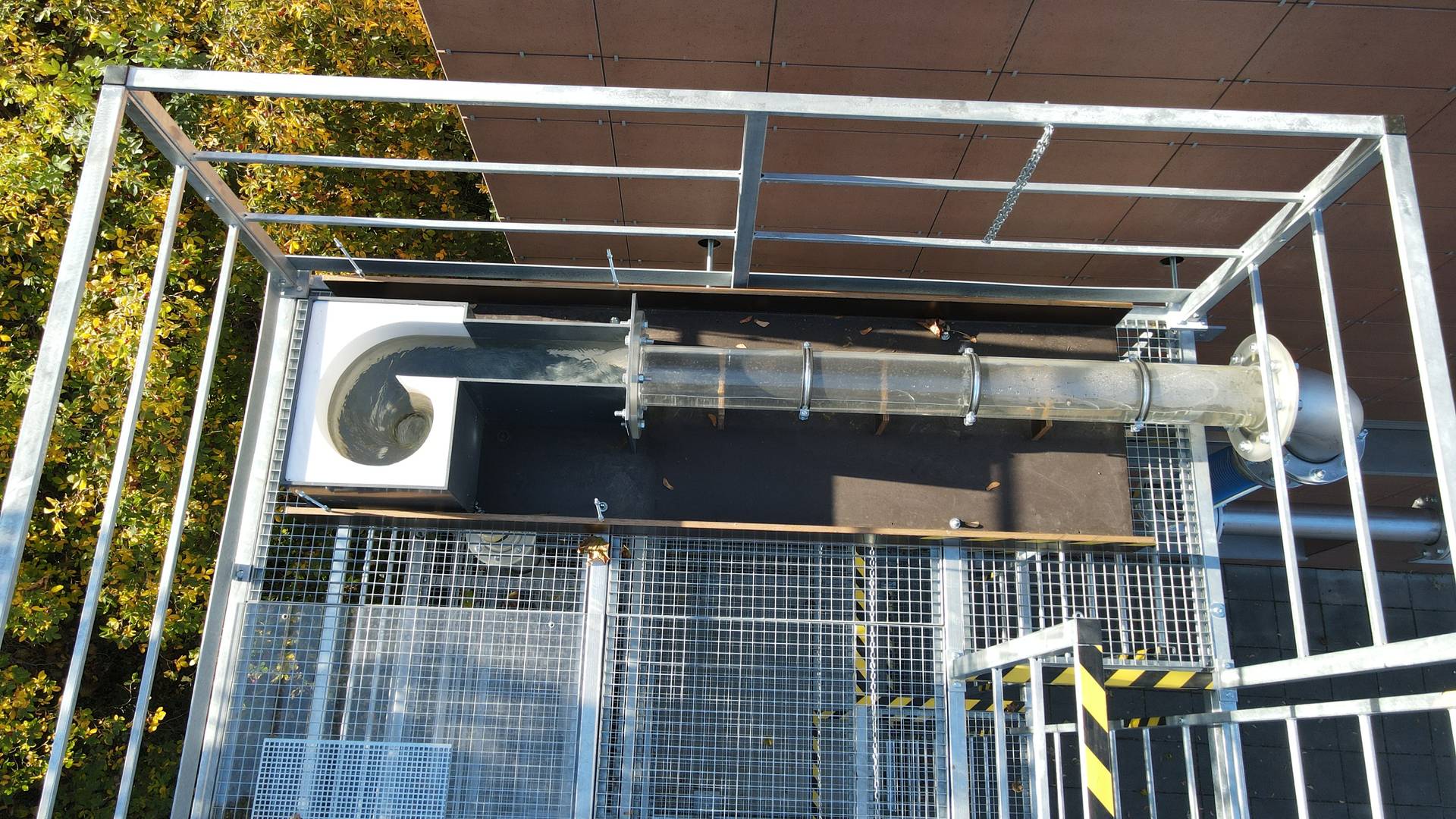
A Seven-Metre Model Too Large for the Laboratory
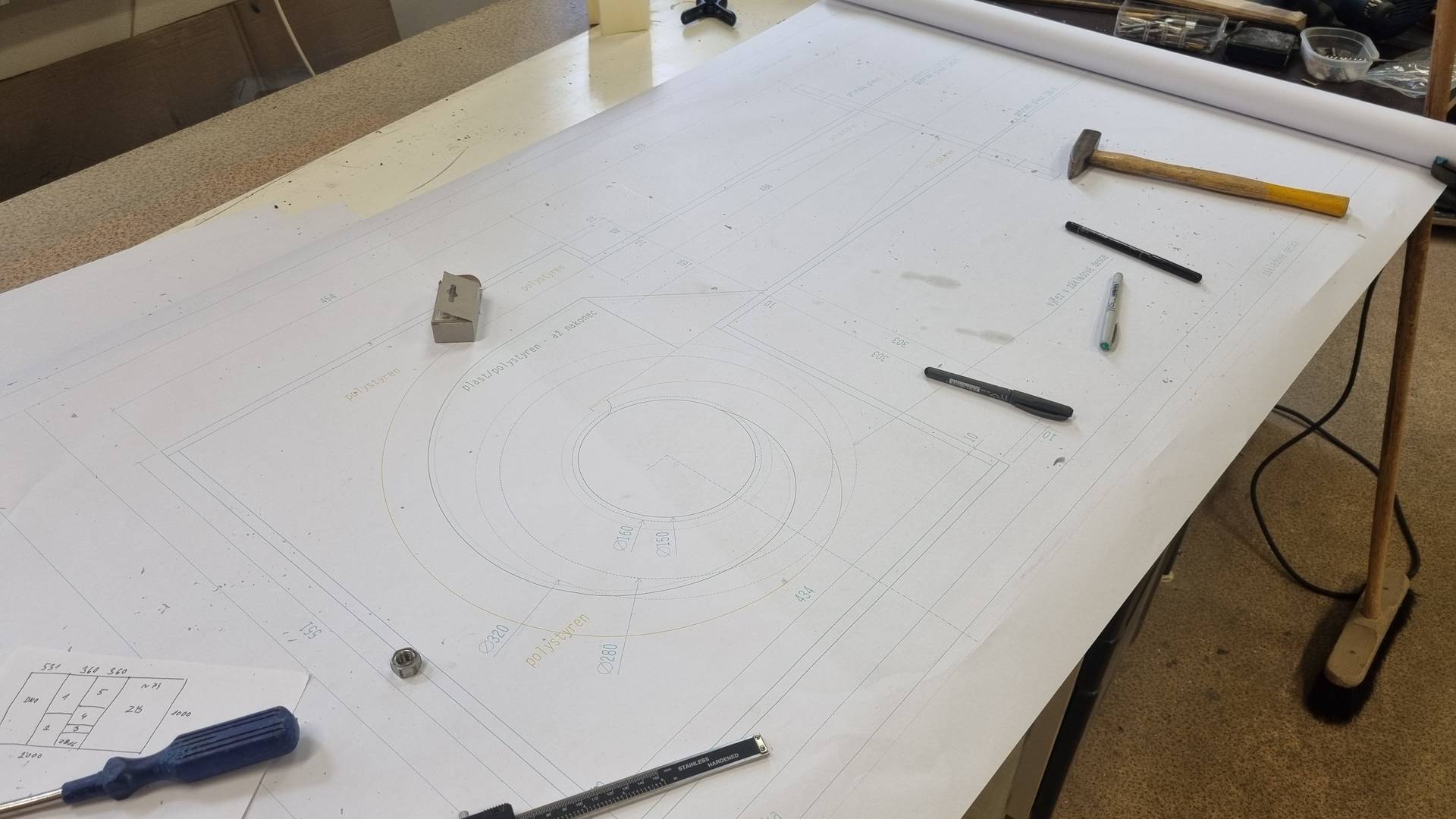
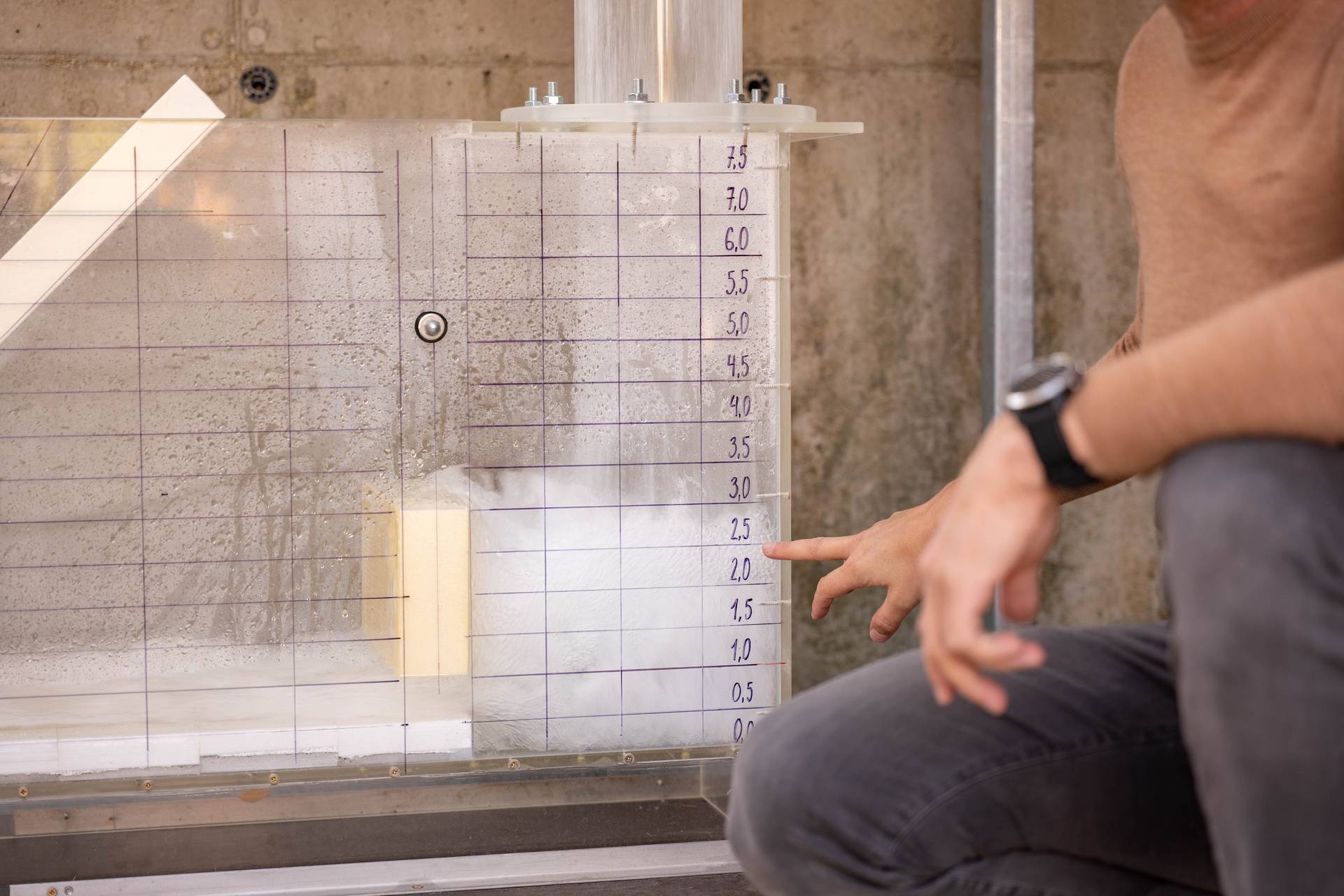
To investigate how water will flow through the proposed structure, the researchers built a physical hydraulic model at a scale of 1:13.33 outside Building F. Despite being significantly smaller than the full-scale structure, the model still stands approximately seven metres high.
"Many research facilities would not be able to build a model of this size because it simply would not fit inside a conventional laboratory. Fortunately, we have the option of installing it outdoors," says Žoužela.
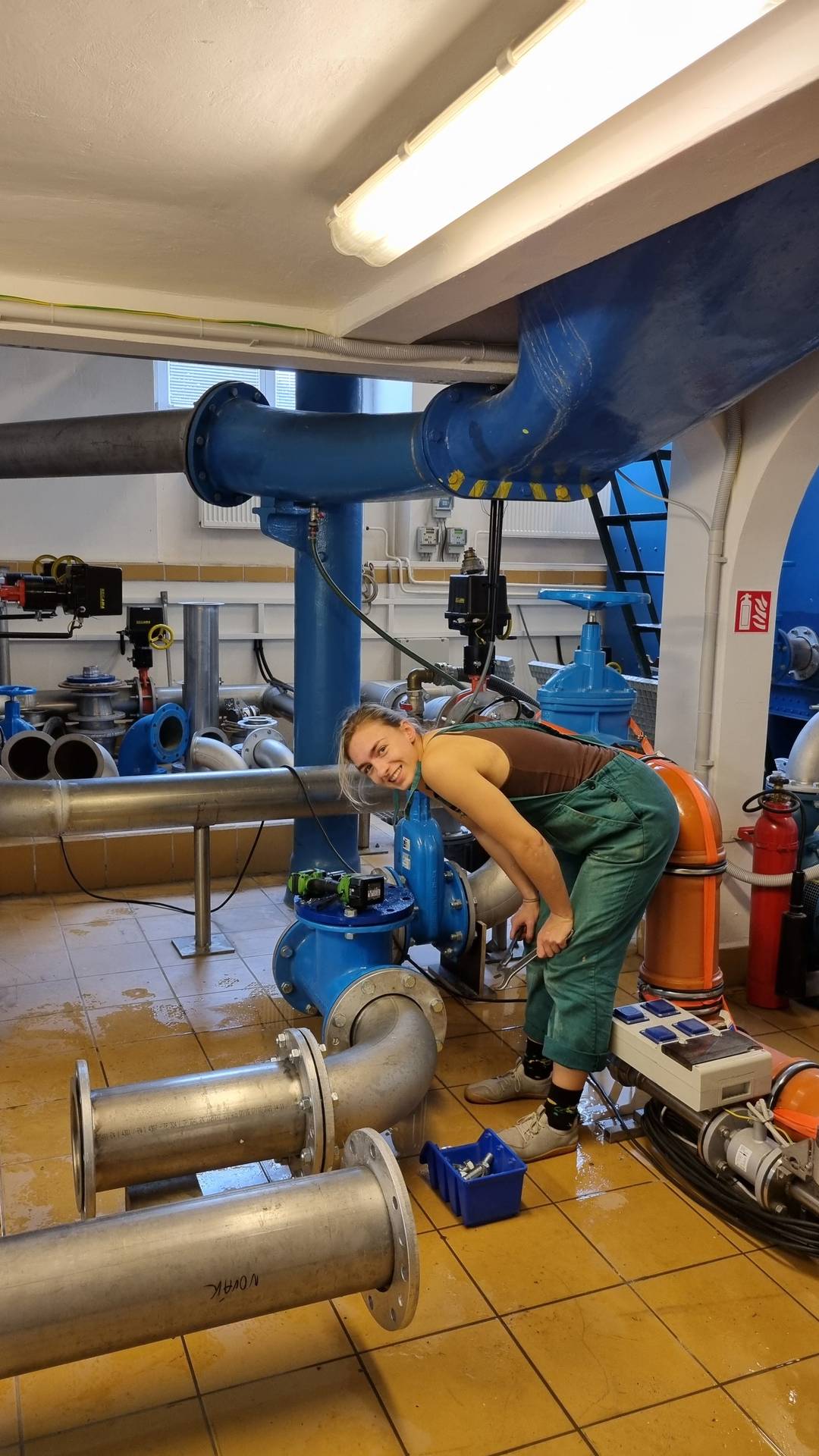
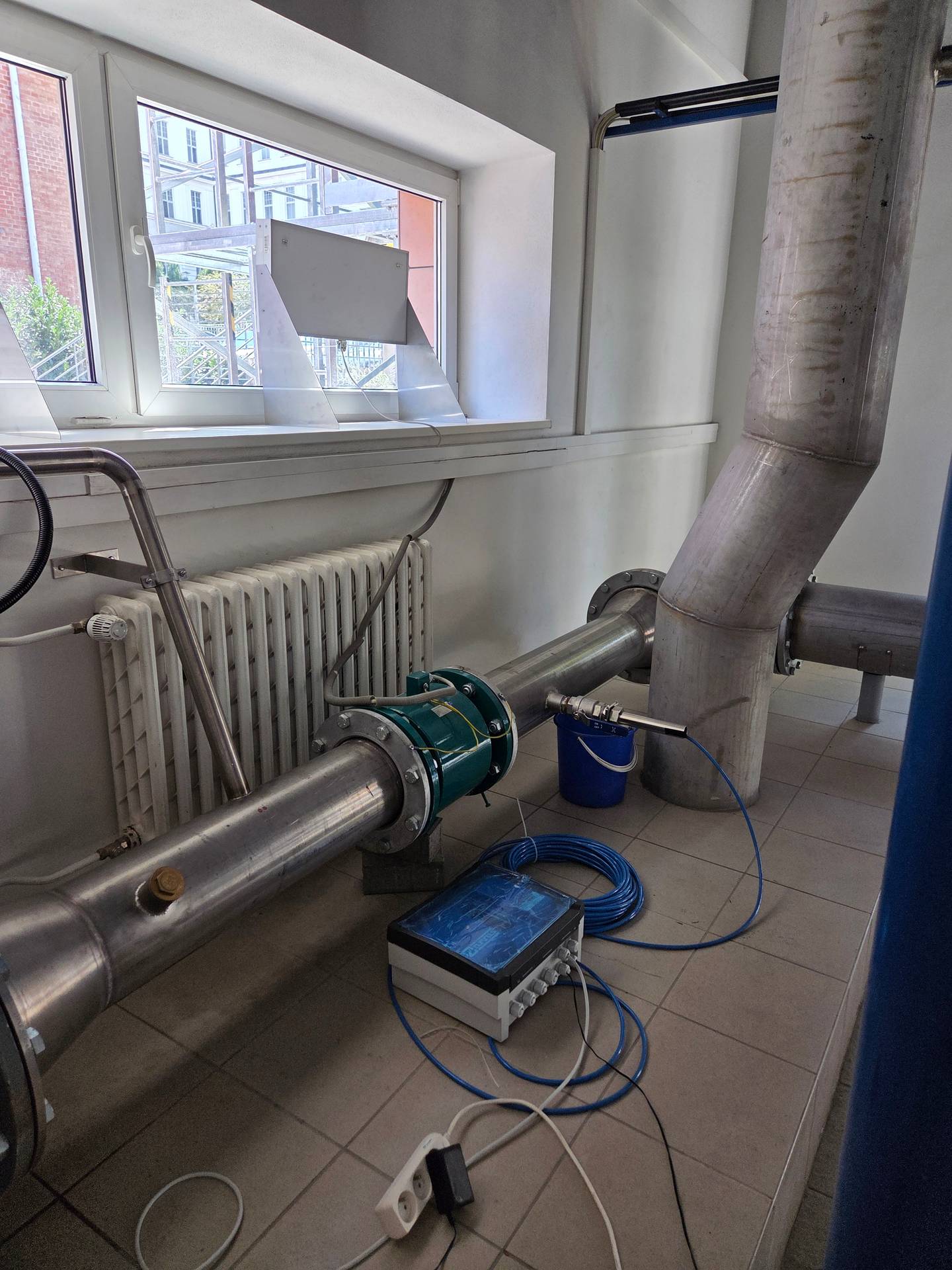
The model is a scaled-down representation of the proposed structure, allowing researchers to observe the actual behaviour of flowing water and verify the performance of its individual components. Water is pumped into the model from storage tanks, flows through the entire structure and then returns to the tanks.
This creates a closed-loop system that allows experiments to be repeated at different flow rates. The measurements are subsequently converted to full-scale values in accordance with the principles of hydraulic model similarity.
"To the public, it often looks as though all we do is float rubber ducks through our models. But thanks to this clear visualisation, we can sometimes identify a problem within ten minutes and start addressing it immediately," explains Žoužela.
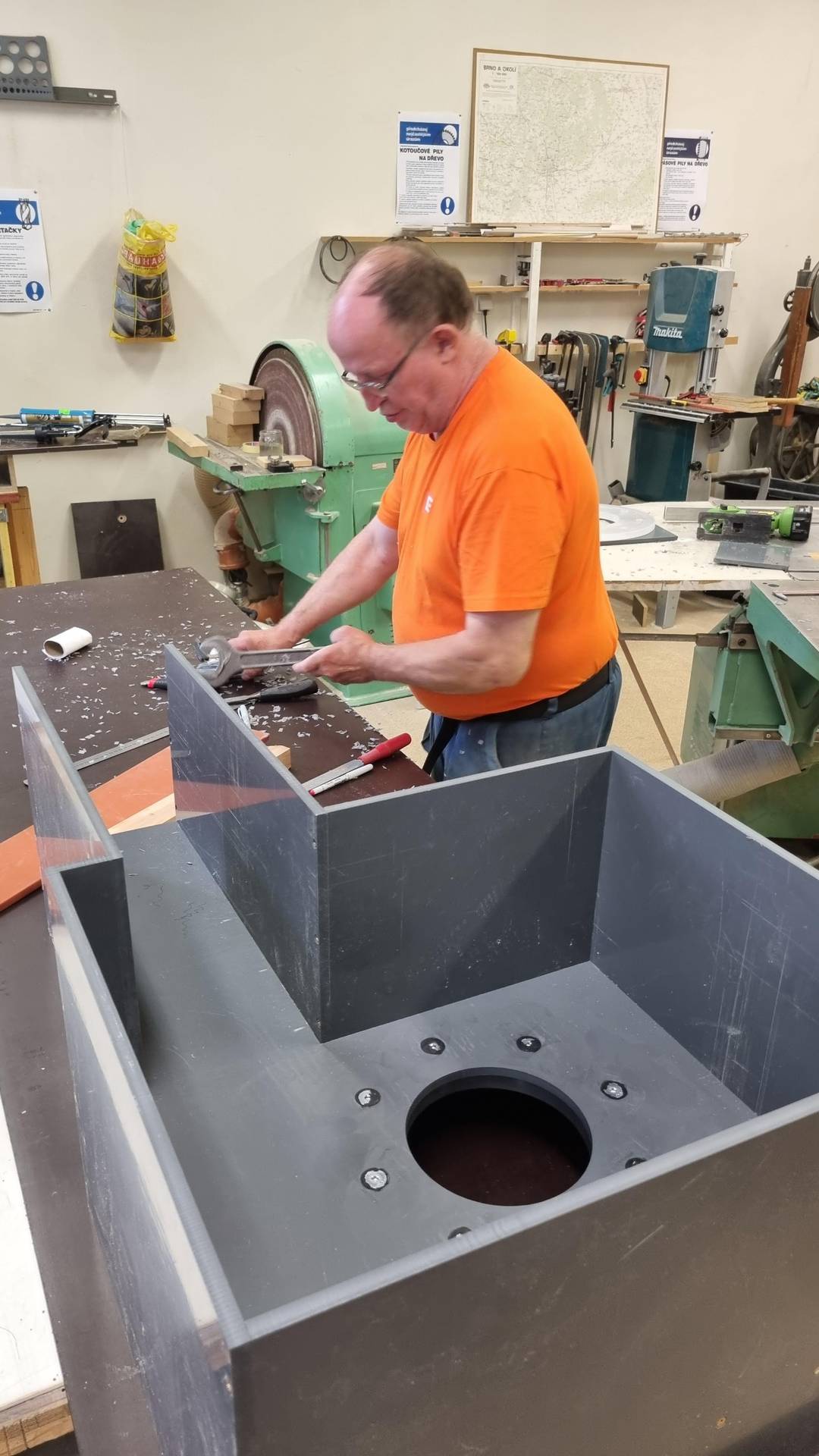
Constructing a model of this size is far from straightforward. It takes several months and requires cooperation between a number of specialists.
"With models like these, it takes courage just to embark on their construction. It is a genuinely large engineering structure and presents a considerable challenge. But we have that courage at FCE," adds Žoužela.
6,500 Litres of Water per Second
One of the research team's main objectives is to verify whether the drop shaft can safely handle exceptionally heavy rainfall. This requires determining the design flow rate.
What Is a Design Flow Rate?
The design flow rate specifies the volume of water that a hydraulic structure must be capable of handling safely. It is usually expressed in cubic metres per second (m³/s).
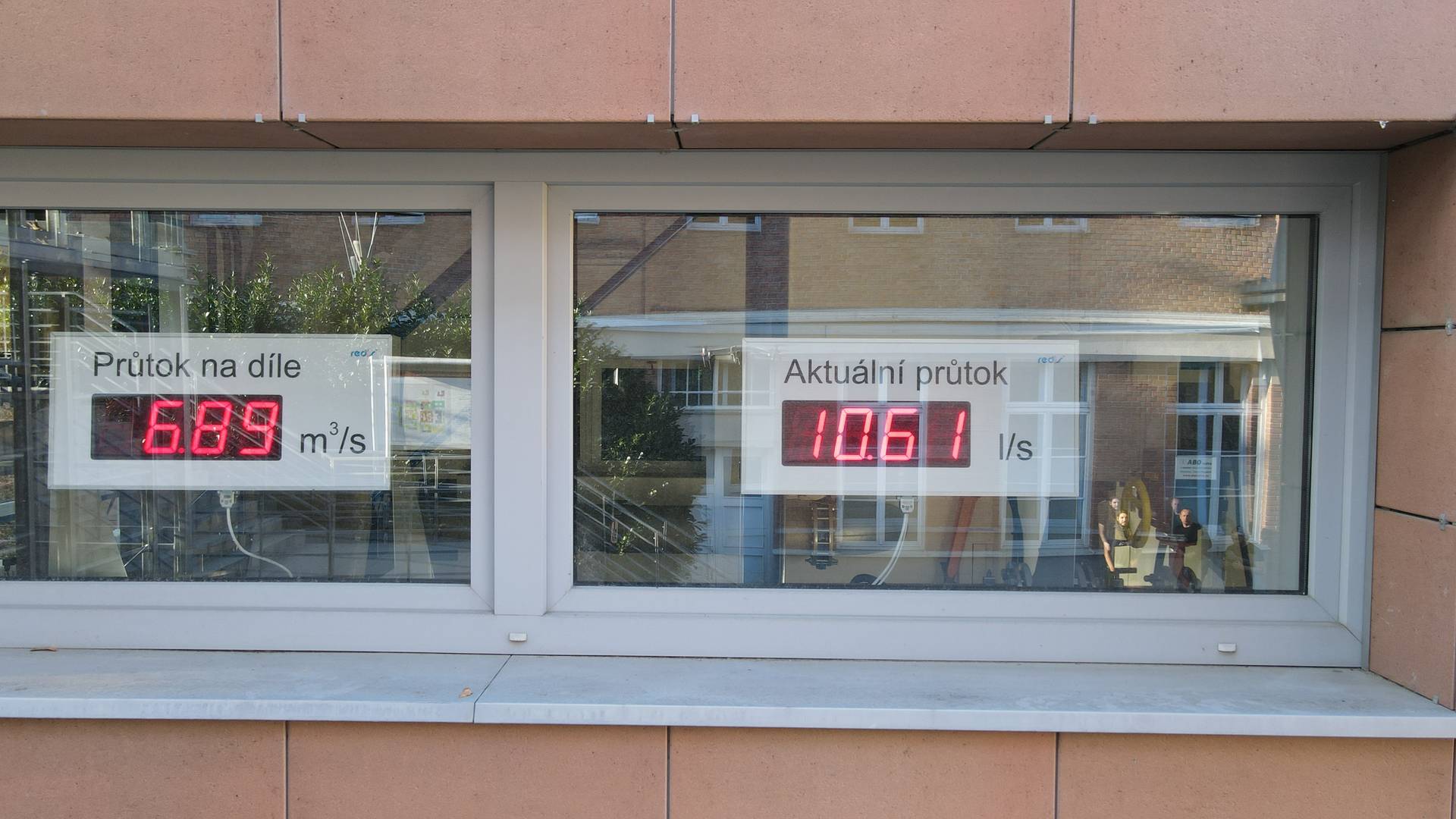
For the D0 motorway drop shaft, the design flow rate is 6.64 m³/s. This means that the structure must be capable of conveying more than 6,000 litres of water every second – roughly equivalent to the capacity of a large road tanker.
Water Flows Down, Air Travels Up
Although the drop shaft is a hydraulic structure, air also plays a crucial role in its operation. As water falls through the shaft, it entrains a considerable volume of air, which could cause uncontrolled turbulence when the water reaches the bottom.
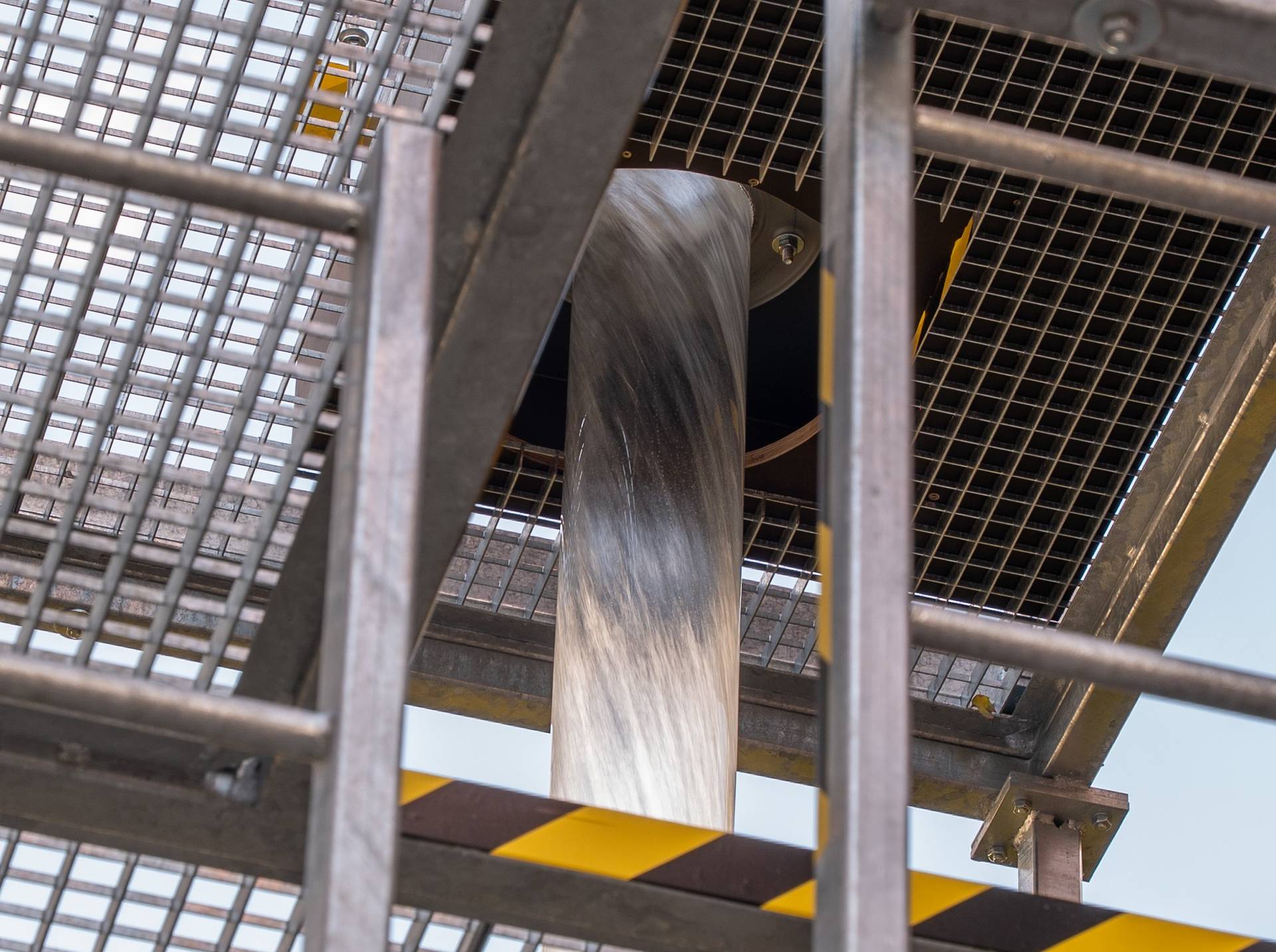
Alongside the drop shaft itself, the researchers are therefore designing a separate air pipe to return the entrained air from the lower chamber to the upper part of the structure. This will create an air recirculation system, in which water flows downwards while air travels upwards.
Another Drop Shaft on the Opposite Bank?
The experience gained from this technically demanding project may prove valuable to the team in the near future. Construction of another section of the Prague Ring Road is planned on the opposite bank of the Vltava River, where a similar drop shaft will also be required.
The findings of the current research could therefore contribute to the design of comparable hydraulic structures in the future.
Michal Žoužela
Michal Žoužela has worked at the Faculty of Civil Engineering, Brno University of Technology, since 2001. His doctoral research focused on evaluating methods for measuring and analysing velocity fields in open-channel flows. He currently heads the Water Management Research Laboratory at the Institute of Water Structures, FCE BUT.
For 30 years, his professional work has focused on physical modelling of hydraulic structures and official flow measurement. He has contributed to the design of major hydraulic engineering projects in the Czech Republic, including the new emergency spillway at the Orlík Dam, as well as assessments of spillway safety at numerous other dams.
In addition to his research, he has extensive experience in designing hydraulic laboratories and specialised research facilities for other universities and research organisations.
| Short link | https://www.fce.vutbr.cz/en/faculty/media/8604 |
|---|---|
| Responsible person | Mgr. Veronika Balko |
| Published |