Page Navigation

Go to Content | Go to Main Menu | Go to Search

FCE BUT

Menu
  • Applicants Submenu
    • Why study at the FCE?
    • Short-term study & Training
    • Programmes in English
    • Open Days

    E–application

  • Students Submenu
    • Academic Year
    • Degree Programmes
    • Courses
    • Student Associations
    • Contacts
    • Library (external link)
    • Final Thesis (external link)

    Office hours at Office of Academic Affairs

    • Monday
      13:00 – 15:00
    • Wednesday
      9:00 – 12:00
    • Thursday
      9:00 – 12:00

    More about Office of Academic Affairs

    Do not miss

      Calendar of Events

    • Research Submenu
      • Achievements
      • Licences & Patents
      • Research Centers
      • Research Themes
      • Projects
      • Results
    • Cooperation Submenu
      • Corporate cooperation
      • International cooperation
      • Cooperation with schools
      • Faculty services
    • Faculty Submenu
      • Map of Campus
      • Organizational structure
      • People
      • Media
      • Currently
      • History
      • Social Safety
      • Contacts

      News

      • Library is open!

      • Your Guide to Chill-Out Zones at FCE BUT

      More news

      Do not miss

      • November 6, 2026

        Open Days for Applicants (6–7 November 2026)

      • November 12, 2026

        International Conference on Rehabilitation and Reconstruction of Buildings (CRRB)

      Calendar of Events

    • CS
    • Log on

      Log on

      • Student Intranet (external link)
      • FCE Moodle (external link)
      • Intaportal BUT (external link)
      • BUT mail / Office 365 (external link)
      • BUT mail / Google (external link)
    • Hledat
    • CS

    Zavřít

    1. FCE
    2. Faculty
    3. Media
    4. News Detail

    Faculty of Civil Engineering at BUT Joins Research into the Active Santorini–Kolumbo Volcanic System

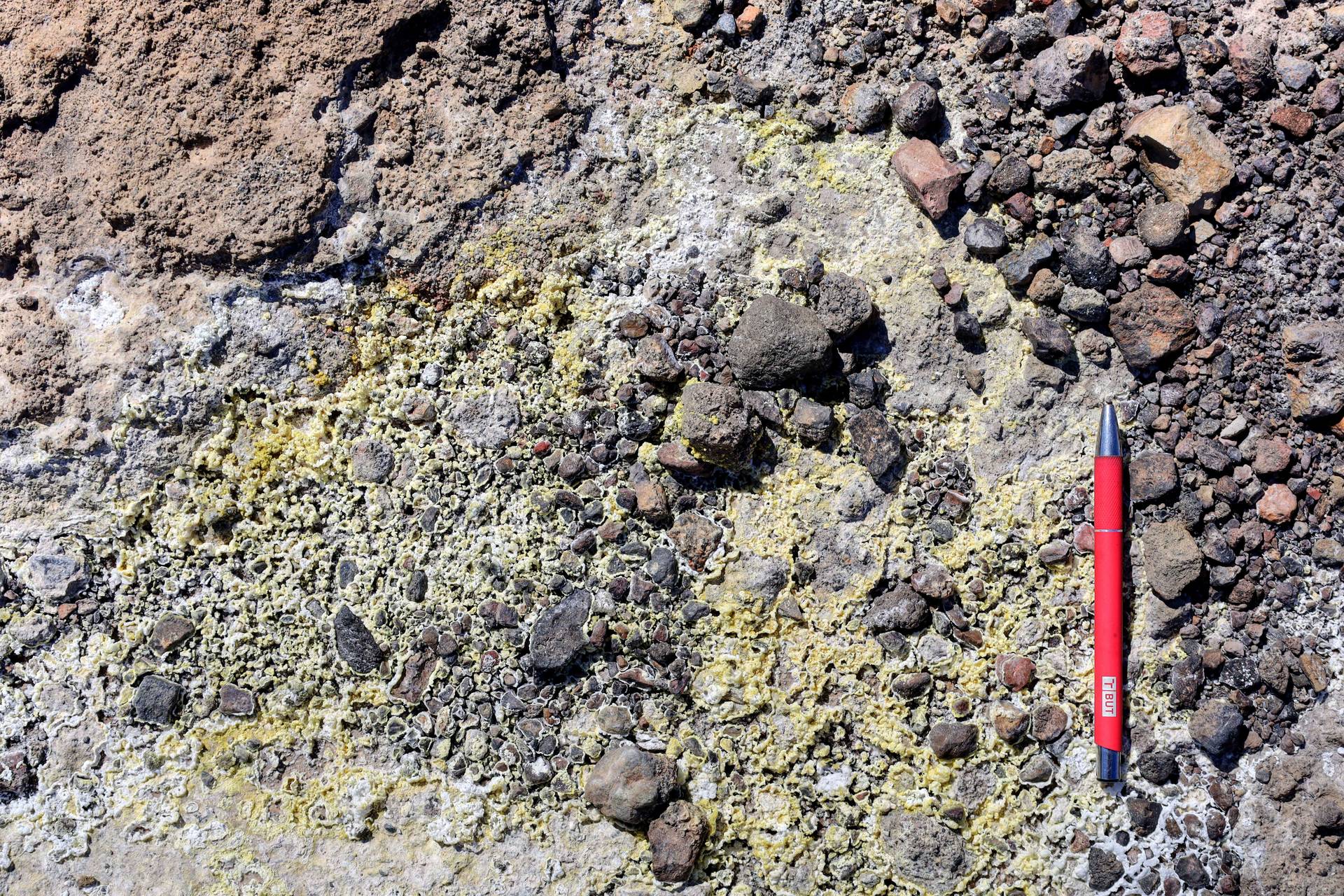
    Volcanologist Lukáš Krmíček from the Institute of Geotechnics travelled to Santorini in June to investigate how hydrothermal processes affect the strength, porosity and other mechanical properties of volcanic rocks, and how these changes may influence the long-term stability of volcanic complexes. During the field campaign, he collected samples of fresh lava from the 20th-century eruptions of Nea Kameni, as well as rocks strongly altered by sulphur-rich fumaroles. Sampling was carried out in coordination with Greek colleagues from the Institute for the Study and Monitoring of the Santorini Volcano (ISMOSAV) and the National and Kapodistrian University of Athens (NKUA).
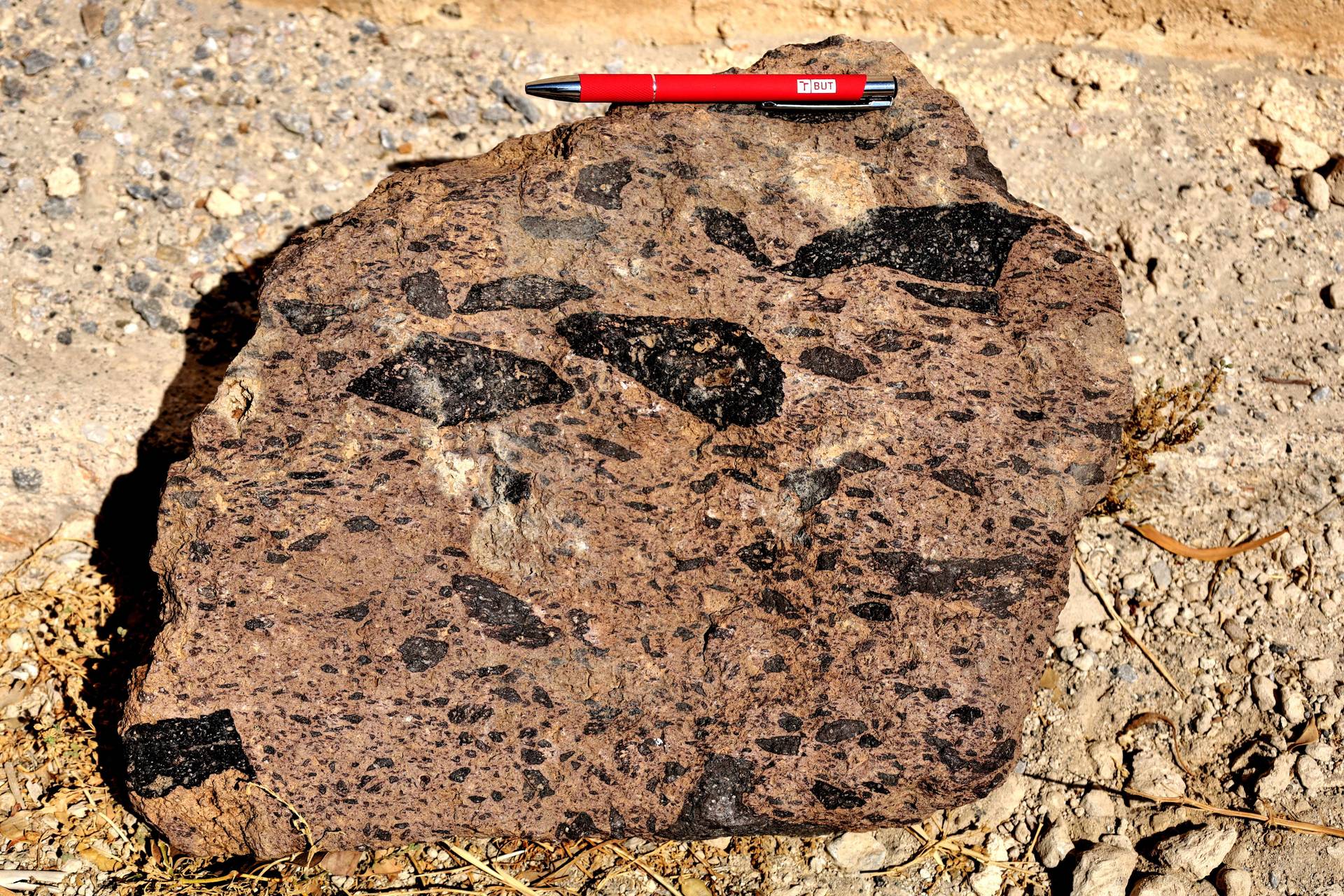
    A sample of Minoan ignimbrite from the Santorini eruption approximately 3,600 years ago. The dark, lens-shaped structures are fragments of originally porous pumice formed within a hot pyroclastic flow. | Photo: Lukáš Krmíček

    Santorini is one of the most extensively studied volcanic regions in the world. It has been volcanically active for more than half a million years, and at least twelve Plinian eruptions have occurred over the past 350,000 years. These are exceptionally powerful explosive eruptions that propel volcanic ash and pumice tens of kilometres into the atmosphere. Several of these eruptions were so powerful that the central part of the volcano collapsed, forming a large circular depression known as a caldera.

    This caldera is responsible for the distinctive shape of the Santorini archipelago today.

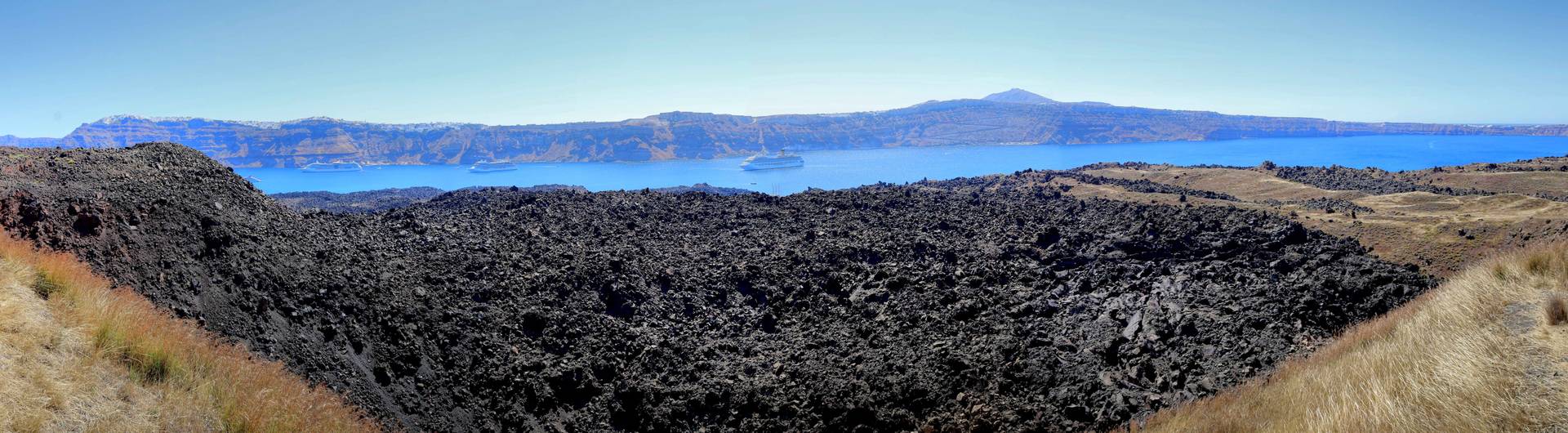
    Major eruptions occur here at intervals of approximately 10,000–30,000 years. The current period is characterised by the growth of the Nea Kameni volcanic centre within the caldera and the gradual replenishment of the magmatic system. Lukáš Krmíček collected numerous samples in this area, focusing primarily on young volcanic rocks. These provide an opportunity to investigate the direct effects of hydrothermal alteration on the strength and stability of lava bodies.
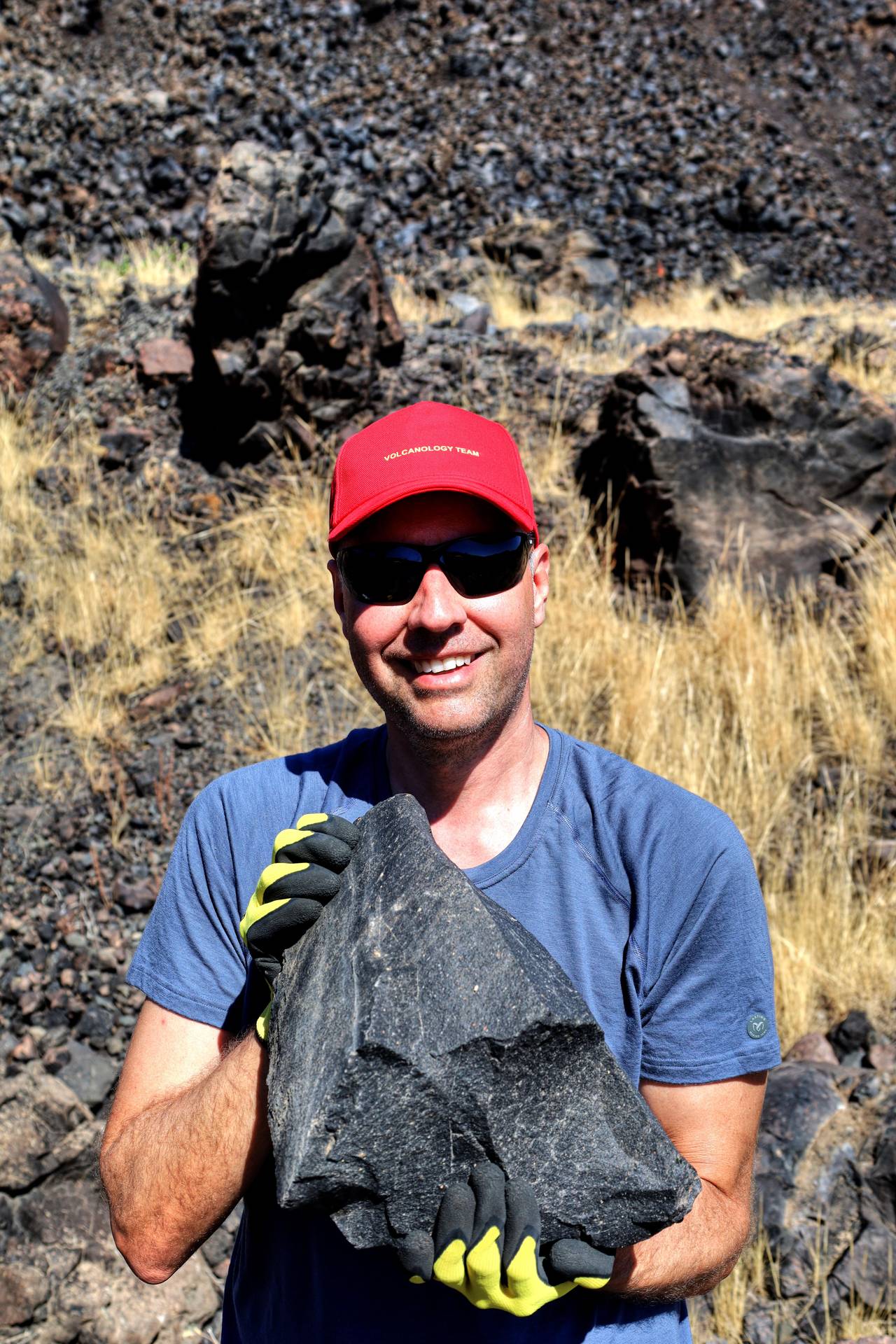
    Lukáš Krmíček collecting samples of young lava on the Nea Kameni volcano. The samples will be used to investigate the mechanical and thermomechanical properties of volcanic rocks. | Photo: Lukáš Krmíček's archive

    In recent years, scientists have focused particularly on the relationship between Santorini and the submarine volcano Kolumbo, located approximately 15 km northeast of the centre of the Santorini caldera. Recent geological and geophysical studies indicate that the two volcanic systems are connected by a shared deep magmatic system. Its activity was also demonstrated by the seismic crisis in early 2025, when thousands of earthquakes led to the declaration of a state of emergency and the temporary evacuation of the island.

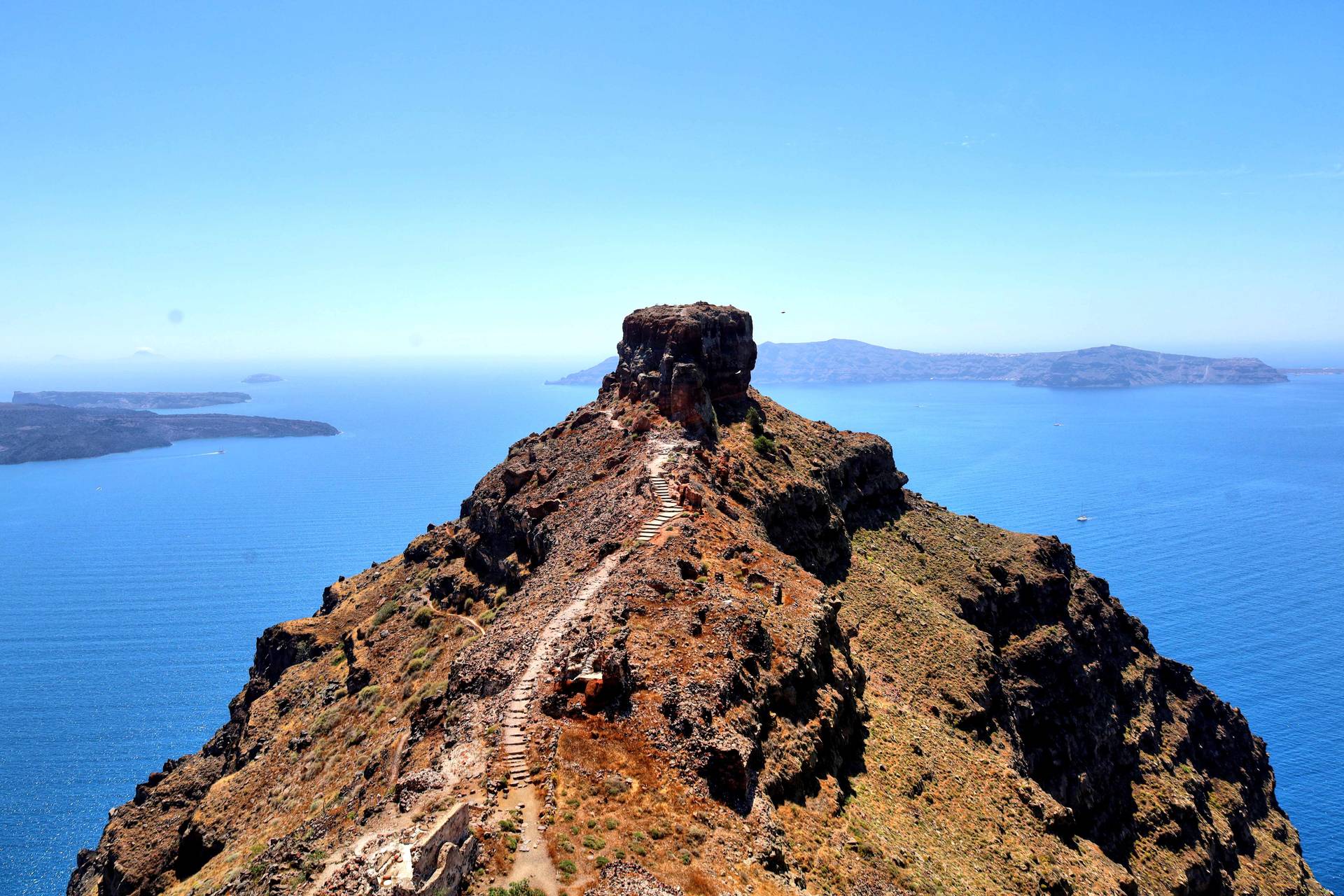
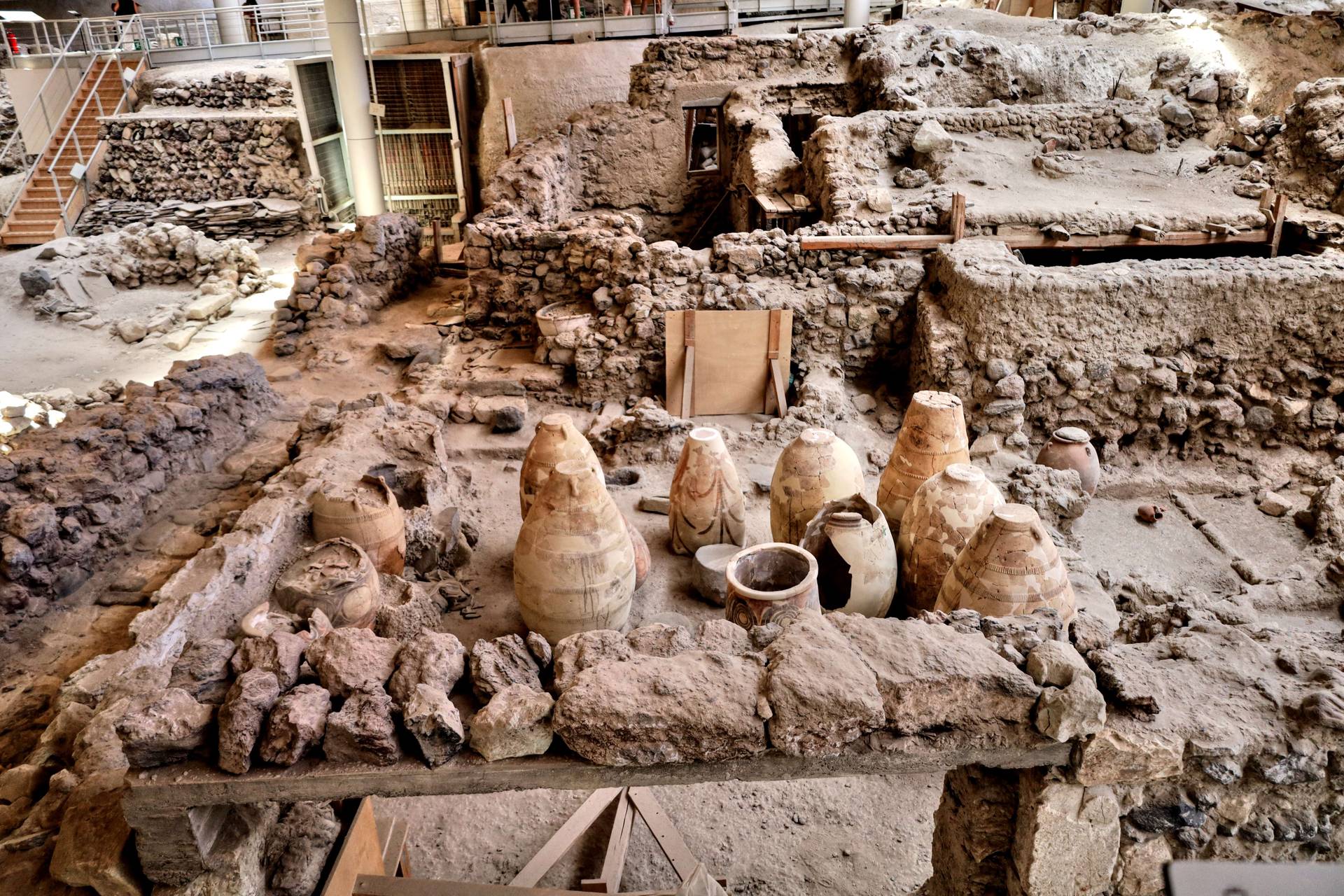
    In addition to Nea Kameni, samples were collected from several other important geological sites on Santorini. These included the oldest volcanic rocks in the archipelago, dating back more than half a million years; lava from the Skaros volcanic neck, formed nearly 70,000 years ago; and deposits from the famous Minoan eruption approximately 3,600 years ago. This catastrophic eruption created the present-day Santorini caldera, buried the city of Akrotiri beneath tens of metres of pumice and ash, and significantly contributed to the decline of the Minoan civilisation in the eastern Mediterranean.

    The results of laboratory testing will contribute to a better understanding of the processes affecting the long-term stability of active volcanoes and associated geological hazards. The research also opens up new opportunities for cooperation between researchers at the Faculty of Civil Engineering at BUT and leading Greek institutions involved in volcanic research and monitoring in the eastern Mediterranean. It builds on the long-standing research focus of the Institute of Geotechnics at the Faculty of Civil Engineering BUT on the mechanical properties of geomaterials and their importance in geological hazard assessment.
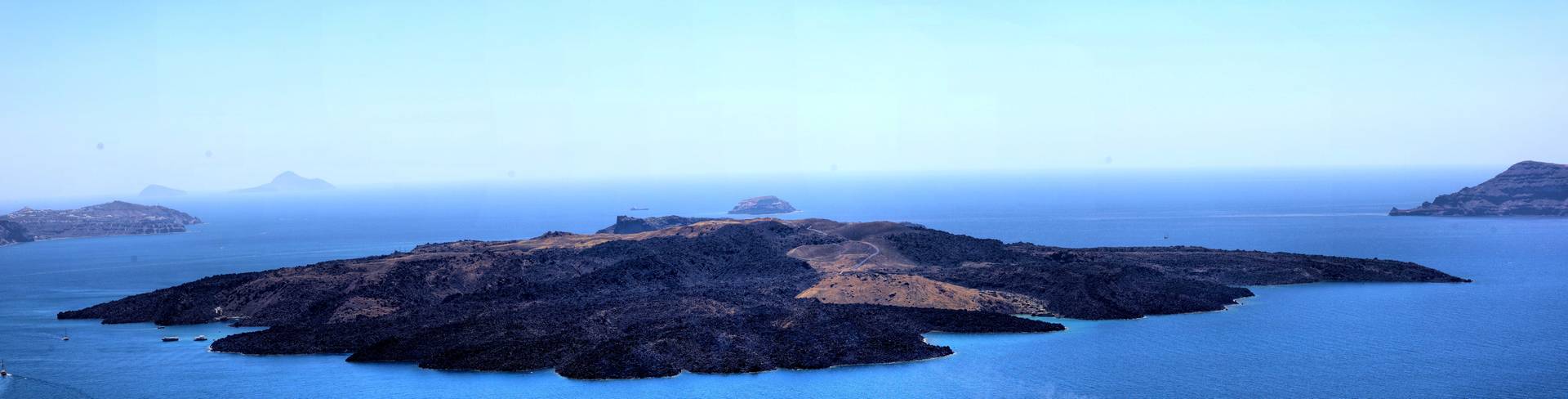
    • Panoramic view of the Nea Kameni volcanic centre in the heart of the Santorini caldera. | Photo: Lukáš Krmíček
    • Lukáš Krmíček collecting samples of young lava on the Nea Kameni volcano. The samples will be used to investigate the properties of volcanic rocks. | Photo: Lukáš Krmíček's archive
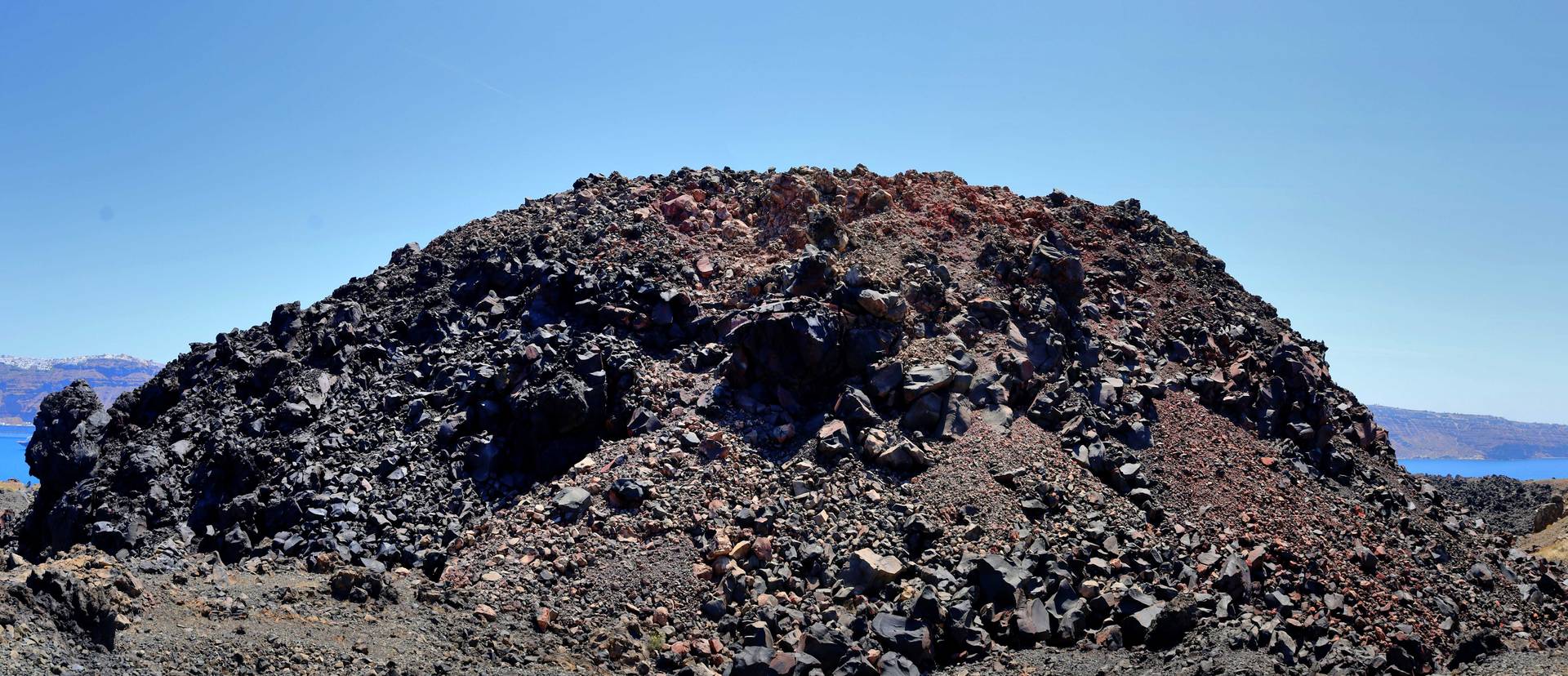
    • The Niki lava dome on Nea Kameni Island, showing varying degrees of alteration, formed during the 1940–1941 eruption. | Photo: Lukáš Krmíček
    • The Liatsikas lava flow from the 1950 eruption, the most recent historically recorded volcanic eruption in Greece. | Photo: Lukáš Krmíček
    • Close-up of hydrothermal alteration of volcanic rocks near a sulphur-rich fumarole in the Georgios crater on Nea Kameni volcano. | Photo: Lukáš Krmíček
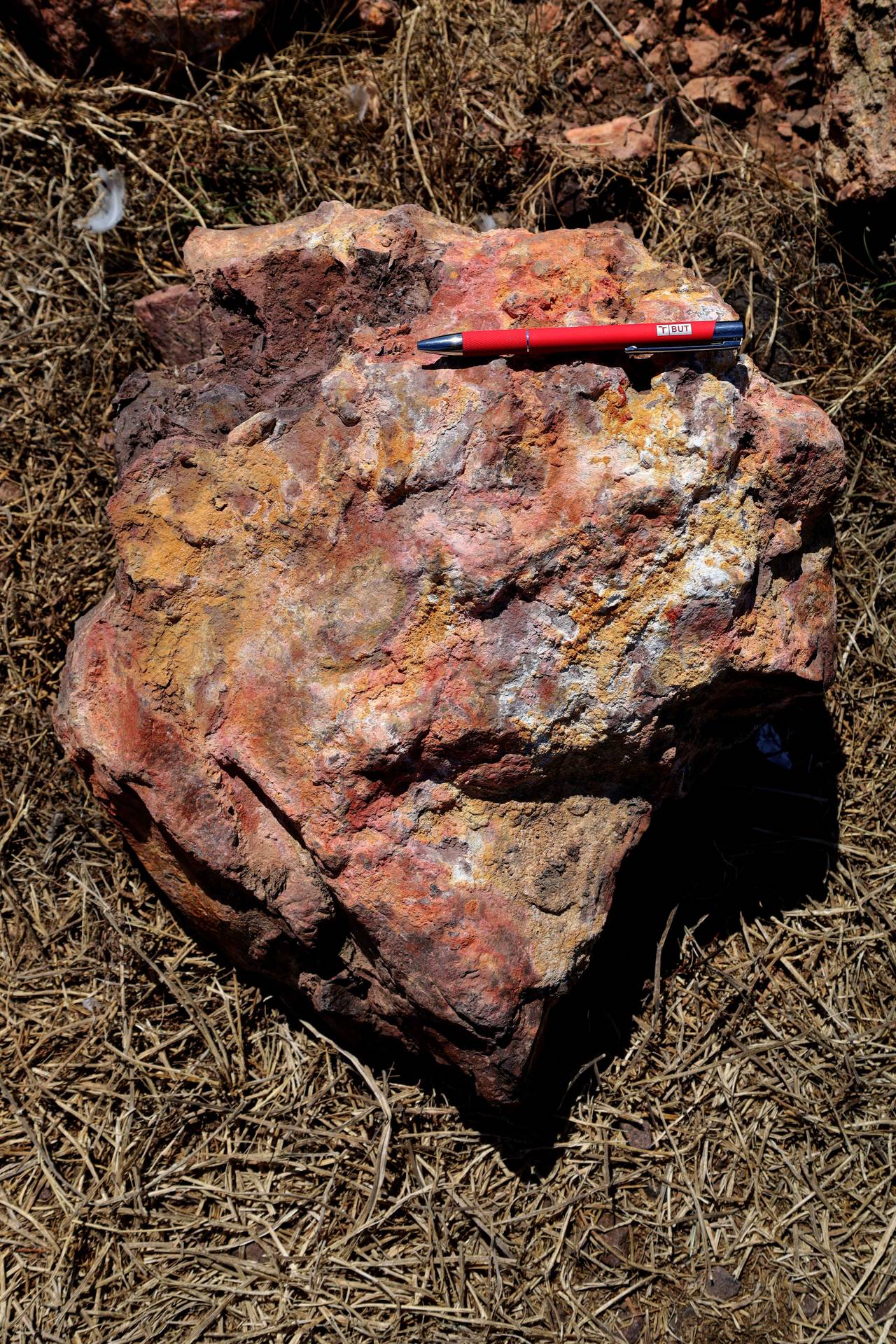
    • Extremely hydrothermally altered lava from Nea Kameni volcano. | Photo: Lukáš Krmíček
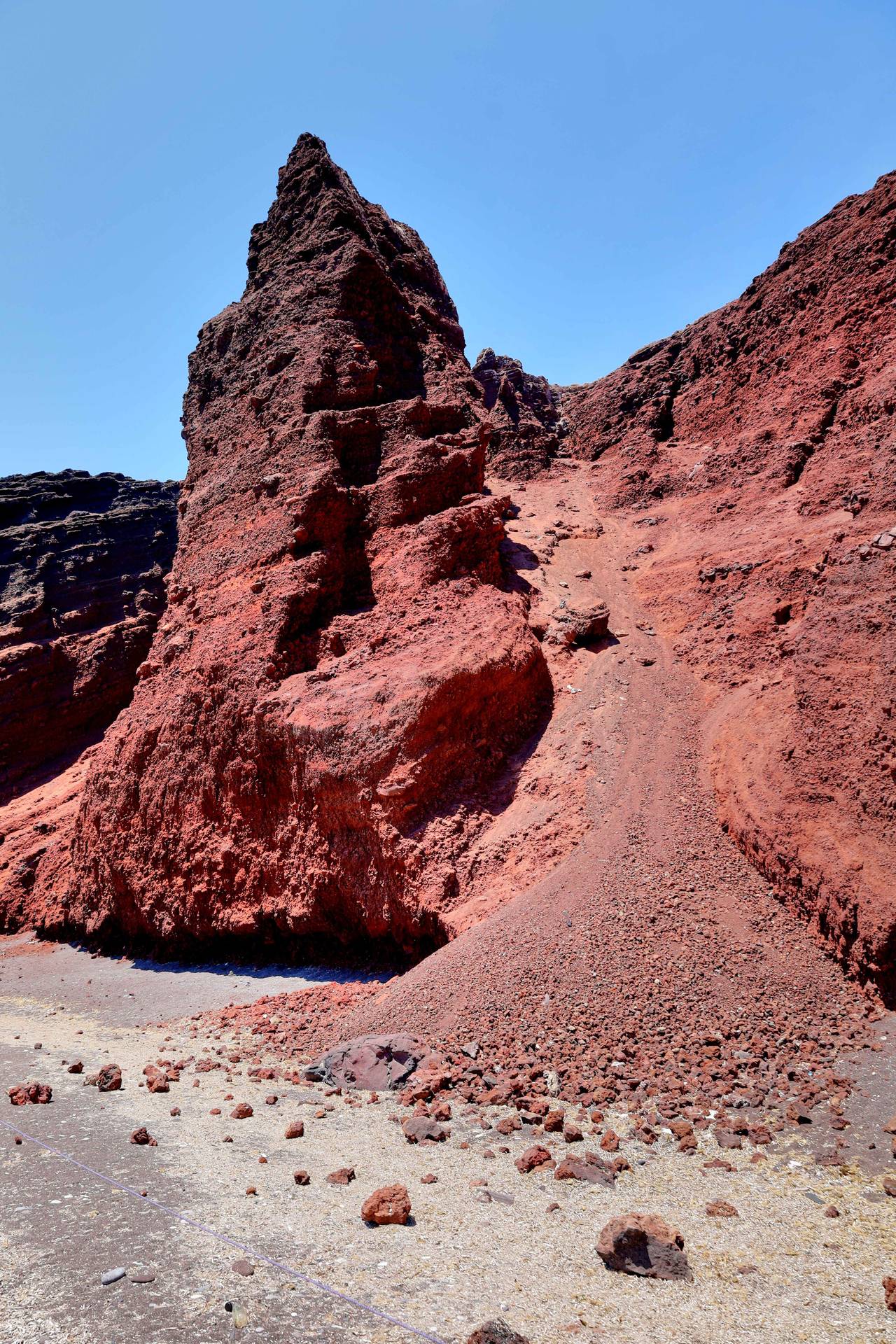
    • An erosion-dissected scoria cone of the Akrotiri volcanic complex. Its rocks are among the oldest volcanic deposits on Santorini, dating back more than half a million years. | Photo: Lukáš Krmíček
    • Skaros – the remnant of a volcanic centre active approximately 67,000–54,000 years ago. Lava flows and subvolcanic rocks formed a rocky promontory above the Santorini caldera. | Photo: Lukáš Krmíček
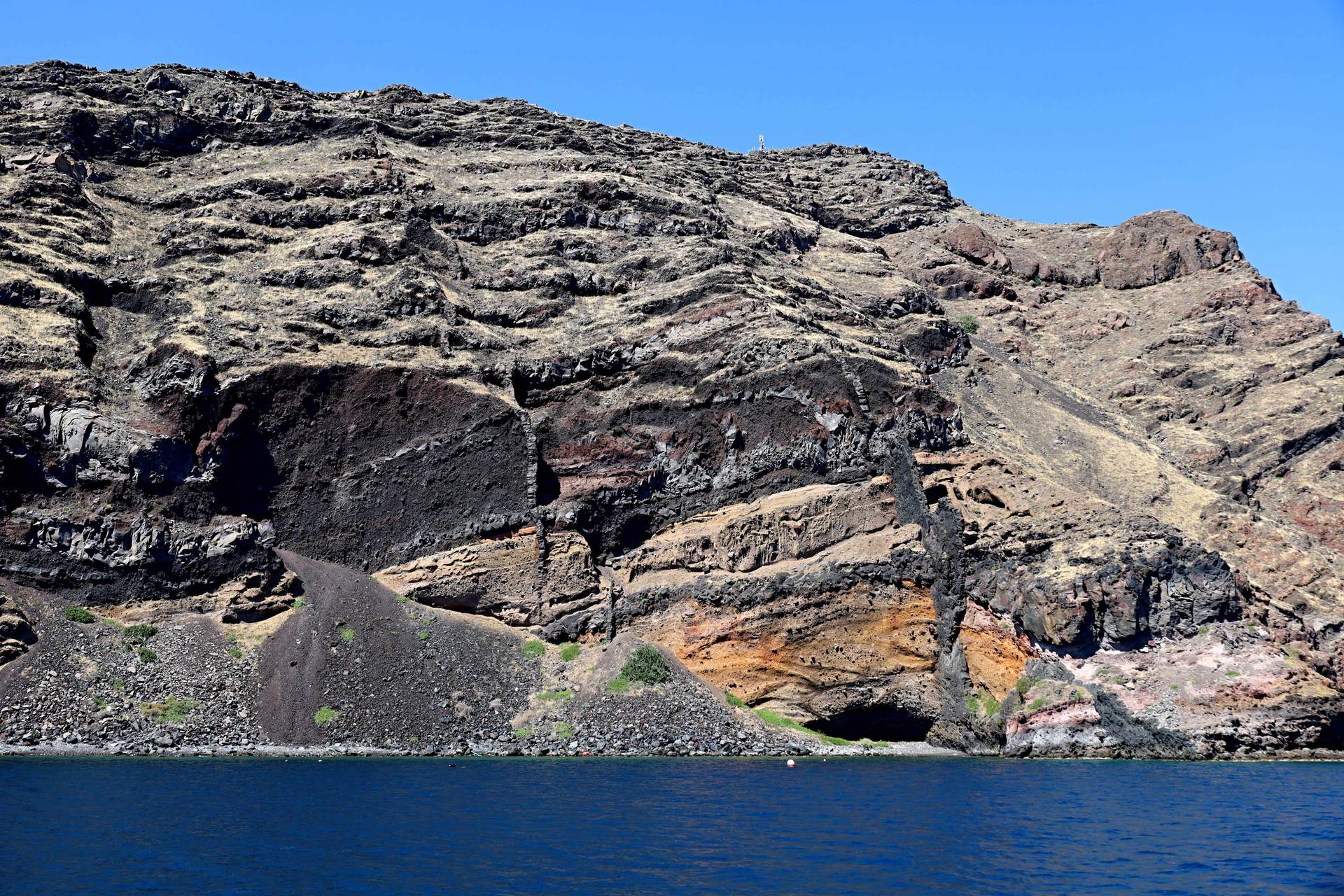
    • Magmatic dykes exposed in the caldera walls of Santorini. They represent “frozen” attempts by magma to reach the surface and trigger an eruption. | Photo: Lukáš Krmíček
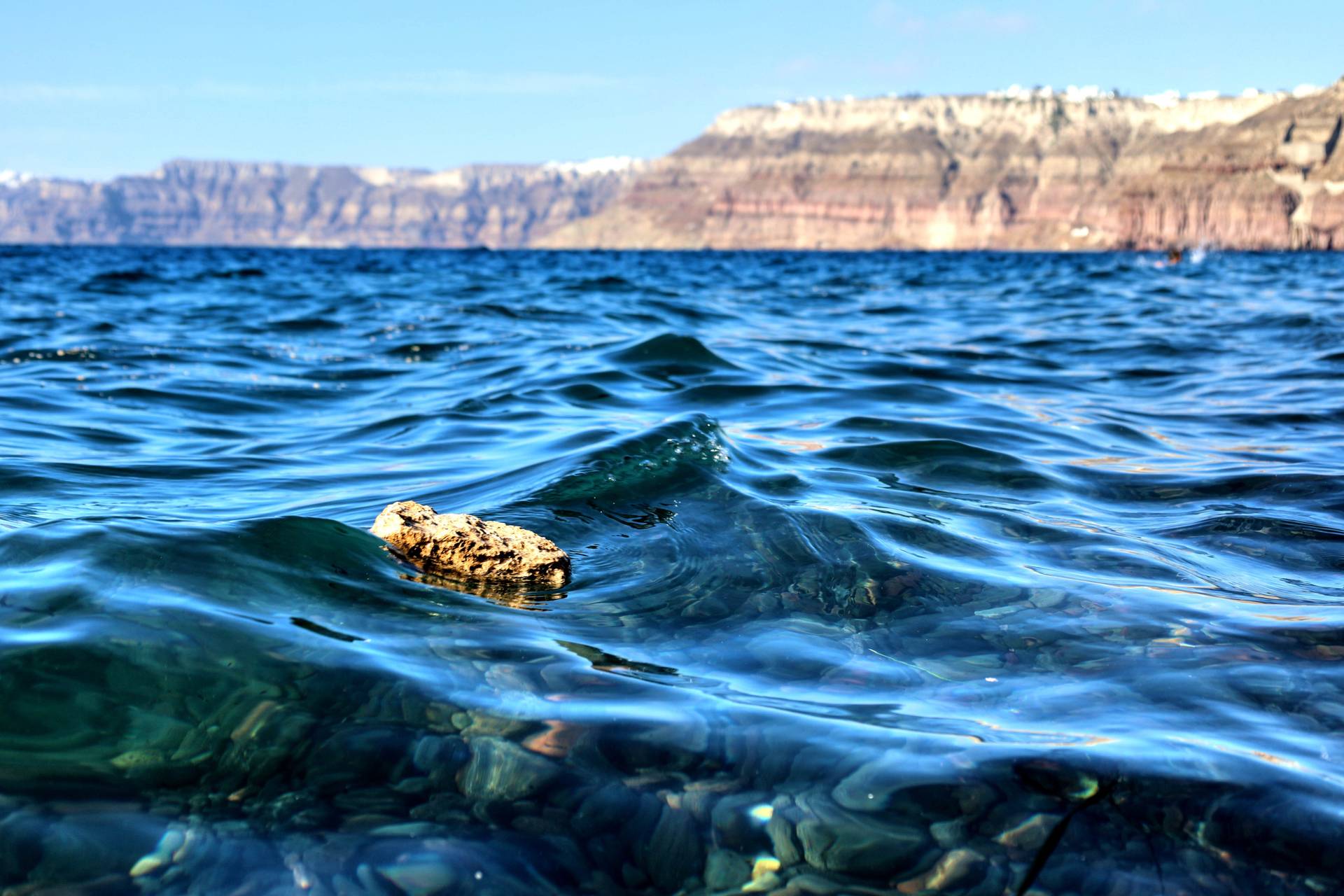
    • A fragment of pumice from the Minoan eruption floating in the Santorini caldera. It originates from the thick deposits of this eruption exposed in the caldera walls. | Photo: Lukáš Krmíček
    • Akrotiri – the remains of a city buried more than 3,600 years ago during the Minoan eruption. The site is exceptionally well preserved, much like the Roman city of Pompeii. | Photo: Lukáš Krmíček

    Share Share Share

    Short link https://www.fce.vutbr.cz/en/faculty/media/8597
    Responsible person Mgr. Veronika Balko
    Published June 19, 2026
    • July 21 2026

      Bridges That Can Detect Structural Defects: PhD Student Kristína Bezručová Collaborates with Danish Experts

    • July 16 2026

      FCE BUT Architecture Students Design the Future of Prostějov. Their Visions Inspire the City and the Public

    • July 7 2026

      3D Concrete Printing in Practice: FCE BUT Students Excelled During an International Programme in France

    • July 2 2026

      June 2026 Graduation Ceremonies: Congratulations to Our New Civil Engineers!

    • June 19 2026

      Faculty of Civil Engineering at BUT Joins Research into the Active Santorini–Kolumbo Volcanic System

    All News

    Responsibility: CIT / Ing. Miroslav Menšík, Ph.D.

    Applicants

    • Why study at the FCE?
    • Short-term study & Training
    • Programmes in English
    • Open Days
    • E–application (external link)

    Students

    • Academic Year
    • Degree Programmes
    • Courses
    • Student Associations
    • Contacts
    • Library (external link)
    • Final Thesis (external link)

    Research

    • Achievements
    • Licences & Patents
    • Research Centers
    • Research Themes
    • Projects
    • Results

    Cooperation

    • Corporate cooperation
    • International cooperation
    • Cooperation with schools
    • Faculty services

    Faculty

    • Map of Campus
    • Organizational structure
    • People
    • Media
    • Currently
    • History
    • Social Safety
    • Contacts

    Log on

    • Student Intranet (external link)
    • FCE Moodle (external link)
    • Intaportal BUT (external link)
    • BUT mail / Office 365 (external link)
    • BUT mail / Google (external link)

    You might also like

    AdMaS Centre
    icon AdMaS Centre (external link)
    BUT
    (external link)
    Halls of Residence and Dining Services
    (external link)
    CESA
    (external link)

    Faculty of Civil Engineering BUT

    Faculty of Civil Engineering BUT

    Veveří 331/95
    602 00 Brno, Czech Republic

    www.fce.vutbr.cz
    contactus.fce@vutbr.cz

    • Facebook (external link)
    • X (Twitter) (external link)
    • Instagram (external link)
    • YouTube (external link)
    • LinkedIn (external link)

    Copyright © 2026 Brno University of Technology Cookies settings

    Cookie usage information

    To Top